Musty Smell in Rugs: Find the Cause and Get Rid of Mildew Odor
A musty rug is a moisture problem first. Trace the smell to its source, dry and deodorize safely in a humid climate, and learn when the foundation needs a full wash.
By Bakers Rug Service · Hand-washed rug care in Miami since 1940
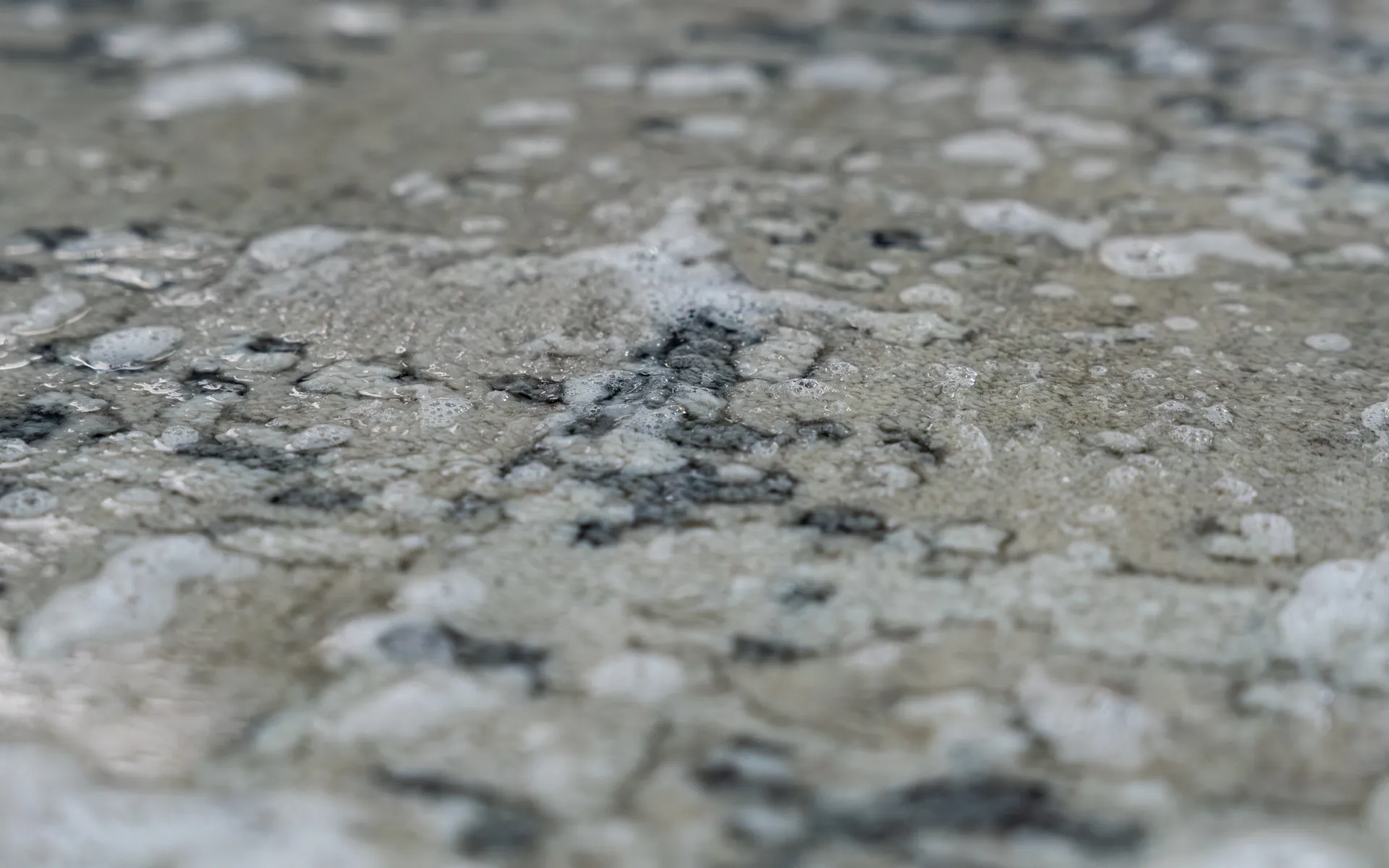
A musty smell in rugs is a moisture problem before it is an odor problem, and in South Florida the air itself can supply the moisture. Sprays and powders may cover the smell for a while, but it comes back until the source is fixed. This guide shows how to find that source, what you can safely do at home, and when a rug needs a full wash.
What Causes a Musty Smell in Rugs?
A musty smell is the byproduct of mold, mildew or bacteria growing on fibers that stayed damp. Smithsonian textile conservation guidance traces musty odors to volatile compounds these organisms release. Mildew is the everyday name for mold on damp household surfaces and fabrics, and it needs moisture plus something to feed on, such as soil, spills or the fibers themselves.
Rugs are prone to it because natural fibers absorb water quickly and release it slowly. In still air, mold can grow on cotton once relative humidity (the moisture in the air compared with the most it can hold at that temperature) passes about 80 percent, while wool and silk hold out until about 92 percent. Synthetics such as polyester and nylon absorb little moisture.
Many hand-knotted wool rugs are woven on a cotton foundation, the warp and weft threads that hold the pile, the yarn you walk on. The pile can feel dry while the cotton underneath is still damp. That fits University of Georgia Extension's observation that mildew usually grows first on the back, and it explains why the smell can outlast a clean-looking surface.
Why Does Your Rug Smell Like Mildew? Find the Source First
If your rug smells like mildew, one of five moisture sources is usually behind it, and each needs a different fix. Narrow it down before you buy any product.
| What you notice | Likely source | How to confirm |
|---|---|---|
| Smell is strongest when you lift the rug | Damp pad or floor | Feel the pad and floor; look for dark patches or a leak |
| The whole room smells stale, worse on muggy days | High indoor humidity | A humidity meter reads above 50 percent, or windows and pipes show condensation |
| Sharp, ammonia-like odor in one area | Pet accident | Check the back for a stain or a stiff patch |
| Musty after months rolled up | Storage | Recall where it sat: plastic, a garage, an attic, an outside-wall closet |
| Smell began after a spill, leak or cleaning | Slow drying | Did it take more than a day or two to dry? |
Quick test: Fold back a corner and smell the back. If it smells stronger than the face, the problem is in the foundation, and sprays or powders on the surface will not reach it.
Damp Pad or Floor
The U.S. Environmental Protection Agency (EPA) lists the underside of carpets and pads among the places mold hides. Check for leaks near doors, the air handler and appliances, and keep the rug off the spot until the pad and floor are dry. If the pad is past saving, see how to choose a rug pad.
Pet Accidents
Urine that reaches the foundation keeps smelling until it is washed out. Spills and soil add to the problem, because Smithsonian guidance notes that organic residue lets mold grow at lower humidity than a clean textile would need. Our guide to removing pet urine from a rug covers fresh and old accidents.
Storage
A rug rolled up in plastic, or kept in a garage, attic or closet against an exterior wall, often comes out musty. Smithsonian guidance advises against attics and closets on exterior walls for textiles because temperature and humidity swing there. Before you put a rug away again, read how to store a rug.
How to Get Mildew Smell Out of a Rug
Dry first and deodorize last: odor treatments only work once the rug, the pad and the room are dry and stay that way.
- Lift it off the source. Raise the rug on clean, dry supports, or fold it back in sections, so air reaches the back, as University of Georgia Extension recommends.
- Dry the air, not just the rug. On muggy days, keep windows closed and run the air conditioning or a dehumidifier. Point fans across and under the rug, but not straight at worn or weakened spots.
- Work fast. EPA says damp materials dried within 24 to 48 hours of a leak or spill usually will not grow mold. The rug is not dry until the foundation is, so check the back by hand.
- Sun the back, not the face. Virginia Cooperative Extension recommends exposing the back of a mildewed rug to direct sunlight. On a dry, breezy day, lay sturdy wool or synthetic rugs face down on a clean surface to shield the colors from sun fading; skip this for silk, viscose and antique rugs.
- Vacuum both sides once dry. Gentle vacuuming lifts dried mold residue. Empty the canister or bag outdoors right away, as University of Georgia Extension advises, so spores are not scattered indoors.
- Air it out before you reach for a product. Smithsonian guidance says warm, dry airing helps a musty smell dissipate, and warns that commercial odor products may make dyes bleed or dull a finish. If you try one, test it in an inconspicuous spot first, and skip powders on handmade rugs: Southwest Looms, a rug maker, warns that powders leave gritty residue behind.
What Indoor Humidity Keeps a Rug From Smelling Musty?
Keep indoor relative humidity between 30 and 50 percent, and do not let it sit above 60 percent. The numbers that matter:
- 30 to 50 percent: EPA's ideal indoor range; the agency advises keeping humidity below 60 percent and using air conditioners or dehumidifiers when needed.
- 75 to 85 degrees Fahrenheit: where Virginia Cooperative Extension says most mildew growth occurs, so in a warm climate, moisture is the lever you control.
- About 80 percent in still air: enough for mold on cotton, the fiber in many rug foundations.
In South Florida, the trap is a room that feels cool but stays damp. Smithsonian guidance notes that humid air that is cooled without being dehumidified ends up with very high relative humidity, so trust a humidity meter over the thermostat.
Where a rug has to live in a damp spot, Virginia Cooperative Extension recommends one with synthetic fibers in both the face and the backing. For year-round climate care, see rug care in Miami humidity, salt air and sun.
Why a Rug Smells After Cleaning
When a rug smells after cleaning, the usual reason is that it stayed wet too long and mildew got a start in the foundation. The common culprits:
- Washing it, or wetting it with a rented carpet cleaner, when it cannot dry within 24 to 48 hours.
- Drying it flat on a floor, patio or lawn, where the back cannot breathe.
- Rolling it up or putting it back on its pad before the foundation was dry.
- Using more water than you could extract, so the foundation stays wet after the pile feels dry.
- Dampening, but not washing out, an old spill or pet accident that then feeds mildew.
A faint damp smell while a rug finishes drying is normal. If the odor is still there once the rug is completely dry, or grows stronger over the next few days, treat it as mildew and go back to the steps above. If the rug is still wet now, follow our guide on how to dry a wet rug.
What Not to Do With a Musty Rug
Do not mask the smell, bleach the rug or add more water than you can remove within a day or two.
- Fragrance sprays and air fresheners. They hide the odor without stopping the growth; Virginia Cooperative Extension notes they have to be used continually.
- Bleach and ammonia. The Carpet and Rug Institute warns that bleaching agents can destroy carpet color and damage fibers, and University of Georgia Extension warns that ammonia damages silk and wool.
- Hydrogen peroxide. Some guides suggest a dilute solution on the back of a mildewed rug, but it is a bleaching agent that can lighten dyes.
- Steam cleaning. Southwest Looms warns that steam can make dyes bleed and shrink wool.
- Hard scrubbing. Smithsonian guidance notes that mildewed areas are weaker than the rest of a textile, and agitation can turn weak spots into tears.
- Wrapping or storing it damp. Plastic traps moisture, so store a rug only when it is clean and completely dry.
When to Call a Professional
Call a professional when the smell lives in the foundation, because home steps treat the surface while the source stays inside the rug. Signs it is time:
- The odor returns after the rug is dry and humidity is under control.
- The back smells stronger than the face or shows dark spotting.
- The rug is silk, viscose, antique or an heirloom.
- A pet accident reached the foundation.
- The rug is too large or thick to dry at home within 24 to 48 hours.
- Some areas feel stiff, brittle or weaker than the rest.
A thorough wash reaches the foundation, where surface treatments cannot, and controlled drying matters just as much, because a rug that dries slowly can start smelling again. At Bakers Rug Service, every rug is washed by hand, individually, and never machine cleaned. We inspect it for dye stability, stains and structural damage, deep-dust it to remove embedded dry soil, hand-wash it with gentle pH-neutral solutions, and handle repairs if you ask. Then it is air-dried in a climate-controlled environment to prevent mold and shrinkage.
Our rug washing and repair services also include pet stain and odor treatment. Estimates are free, and from our shop at 8723 SW 132 St in the Kendall area we offer complimentary pickup and delivery across Miami-Dade, Broward and Palm Beach counties, including South Miami and Doral. Call (305) 232-3368 or tell us about your rug to find out whether yours can be handled at home.
Frequently Asked Questions
Will a musty smell in a rug go away on its own?
Sometimes. Virginia Cooperative Extension notes that airing and drying can banish musty odors, so a faint smell from a short damp spell may fade once the rug, pad and room stay dry. The same publication warns that the odor persists if mildew growth is not stopped and cleaned. If the smell lingers through several dry days, something is still feeding it: a damp pad, humid air or growth in the foundation.
Does a musty smell mean my rug is ruined?
Usually not. A smell caught early often comes out with a thorough wash and complete drying. Lasting marks are more likely when mildew has grown for a long time: Virginia Cooperative Extension cautions that mildew stains cannot always be removed completely, and Smithsonian guidance notes that removing long-established growth can reveal damaged, discolored fibers. An inspection tells you what to expect before you commit.
Should I replace a rug pad that smells musty?
In most cases, yes. A pad is porous, and EPA advises that porous materials may have to be thrown away once they become moldy, so deodorizing an old pad rarely solves the problem. Fix any leak, let the floor and the rug dry completely, and then put down a new pad. Bakers Rug Service offers custom-cut non-slip rug pads if you need a replacement sized to your rug.
How do I keep rugs from turning musty in a closed-up Miami condo?
Don't switch the air conditioning off while you are away; with nothing removing moisture, a closed unit can turn humid fast. Leave cooling or a dehumidifier running, and open closet and interior doors so air moves, an approach Virginia Cooperative Extension recommends for damp closets. Make sure every rug is clean and completely dry before you leave, since soil helps mildew grow, and have someone check on the unit.
Home Fix or Hand Wash?
Tell us about the rug and the smell, and we'll help you decide whether drying and airing will do or the foundation needs a full hand wash. Estimates are free.
Sources
- A Brief Guide to Mold, Moisture and Your Home (U.S. EPA)
- Remove Stains From Mildew, Mold (University of Georgia Cooperative Extension)
- Mold and Mildew on Textiles (Smithsonian Institution)
- How to Prevent and Remove Mildew (Virginia Cooperative Extension, 1994)
- Care and Cleaning: Tips to Maintain Your Handmade Carpet (Southwest Looms)
- Carpet & Rug Care Guide (The Carpet and Rug Institute)