How to Dry a Wet Rug Fast and Prevent Mold: A 48-Hour Plan
A time-boxed plan for spills and household leaks: what to do in the first 2 hours, through the first day and by hour 48, plus the signs a wet rug needs a professional.
By Bakers Rug Service · Hand-washed rug care in Miami since 1940
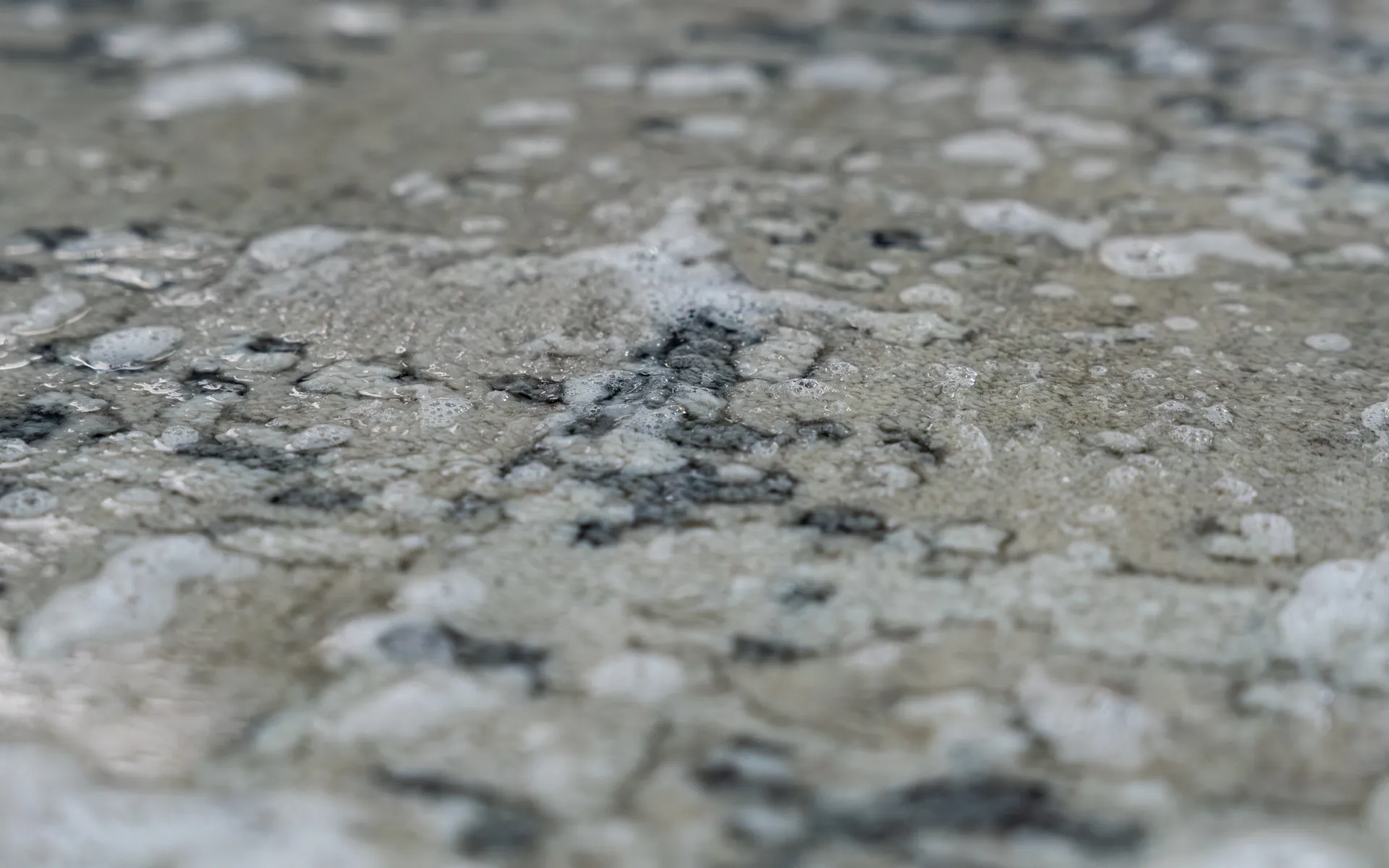
Whether the water came from a spilled pitcher, a dripping supply line or a leaking water heater, the method is the same. How to dry a wet rug comes down to three moves: get the water out, keep dry air moving across both sides, and confirm the rug and floor are dry before mold can start. This guide covers clean-water spills and household leaks; for storms and floodwater, see hurricane season and your rugs.
How to Dry a Wet Rug: The 48-Hour Plan at a Glance
The plan has three windows: remove the water in the first two hours, dry both sides through the first day, and confirm everything is dry between hours 24 and 48.
| When | Goal | What to do |
|---|---|---|
| First 2 hours | Get the water out | Stop the source, confirm the water is clean, lift the rug, separate the pad, blot and wet-vacuum |
| Hours 2 to 24 | Dry both sides | Elevate the rug, run fans above and below, close the room, run AC and a dehumidifier |
| Hours 24 to 48 | Prove it is dry | Check the back, edges and floor; sniff for mustiness |
| Past 48 hours, or any red flag | Hand it off | Call a rug cleaning professional |
Why 48 hours? EPA guidance is to dry wet carpet and its backing within 24 to 48 hours, and NDSU Extension warns that mold growth is likely otherwise, depending on temperature. Because warmth helps mold grow, aim for the short end in a South Florida home.
What to Do in the First 2 Hours After a Rug Gets Wet
To dry a rug after a spill or leak, spend the first two hours stopping the water and pulling out as much as you can, because every cup you remove now is one the air won't have to evaporate later.
Check the water first. This plan is for clean water, such as a spilled glass or a leaking supply line. If it came from a toilet, a sewer line, a washing machine or dishwasher drain, or a flood, or you can't tell, don't turn on fans: EPA advises against using them until you know the water is clean. Skip to the last section.
- Stop the source and stay safe. Shut off the water, then stand on a dry surface and use a GFCI outlet or cord (the kind with test and reset buttons) before plugging in a fan or vacuum, as NDSU Extension advises.
- Move the rug off the wet floor. Get a helper and support the weight from underneath. If you must roll it, roll a towel or cotton sheet in with it; Cleanfax, a cleaning-industry trade publication, warns that wet rugs rolled without a barrier can bleed dye from front to back.
- Separate the pad. It needs its own plan (see below).
- Blot, never rub. Press thick white towels into the wet area, or stand on them, swapping in dry ones until they come up barely damp. Rubbing can damage the pile, the yarn tufts that form the rug's surface.
- Wet-vacuum with the pile. Set up a wet/dry vacuum for wet pickup per its manual and make slow passes in the direction the pile feels smooth; Cleanfax notes that working against the pile can damage it.
- Check the colors. Press a clean white towel on each color. If color transfers, the dyes are bleeding, and Cleanfax notes that the chance of dye damage rises the longer a rug stays wet, so call a professional now.
If the spill was coffee, wine or juice, treat the stain first with our wine and coffee stain guide.
Hours 2 to 24: How to Dry Both Sides of the Rug
For the rest of the first day, keep air moving across the face and the back at once, in a closed room where air conditioning and a dehumidifier pull the moisture out.
Lift It So Air Reaches the Back
Lay the rug flat across several supports, such as patio chairs, sawhorses or clean plastic crates. NDSU Extension calls lifting wet carpet to expose both sides very important and recommends fans above and underneath. Aim one fan across the face and one beneath the rug. If you can't get air under the whole rug, flip it once the face feels dry.
Dry the Air, Not Just the Rug
Close doors and windows, keep the air conditioning running and add a dehumidifier. EPA pairs dehumidifiers with fans for drying wet carpet, and UF/IFAS notes that Florida air conditioners remove moisture as they cool. UF/IFAS suggests keeping indoor relative humidity, the air's moisture compared with the most it can hold at that temperature, around 55 percent or lower. A hygrometer, a small humidity gauge, shows where you stand.
Keep Direct Heat Off Wool
Skip hair dryers, space heaters and radiators on a wool rug. The Woolmark Company advises air-drying wool away from direct heat and warns that drying it over a radiator can change its color or damage it.
Handle the Pad on Its Own
The pad, the cushion or grip layer under the rug, dries on its own schedule, so never leave the two stacked while wet. A pad that took a small clean-water spill can dry flat with air on both sides. One that got wet through from a leak is usually better replaced, in line with NDSU Extension's advice to replace wet carpet padding rather than dry it.
How Long Does a Rug Take to Dry?
There's no single number, because drying time depends on the fiber, the thickness, the foundation and the room; what matters is that the rug is dry front and back within 24 to 48 hours.
- Fiber. Cleanfax notes that natural fibers absorb water more readily than synthetics, so wool and cotton hold more than polypropylene or polyester.
- Thickness. A dense, deep pile holds far more water than a thin flatweave.
- Foundation. This is the grid of warp and weft threads the pile is knotted or woven into. Cleanfax flags the cotton foundations common in natural-fiber rugs as prone to mold, and even synthetic rugs often have cotton or jute inside.
- The room. Humid, still air slows drying; dry, moving air speeds it up.
Hours 24 to 48: Check the Back and the Floor
A rug can feel dry on the surface while the base of the pile and the foundation are still damp. Before you call it done:
- Press a dry paper towel against the back in several places, especially where the water hit first. Any dampness means keep going.
- Feel the edges, the fringe and the center. Damp fibers feel cool to the touch.
- Check the floor. On wood, NDSU Extension recommends a moisture meter before a rug goes back down. On concrete, it suggests taping down a 3-foot square of plastic sheeting for a couple of days; moisture under it means vapor is still coming through.
- Put the rug back only when the rug, the pad and the floor are all dry.
Wet Rug Mold: How to Tell the Clock Has Run Out
A musty smell, spots or fuzz on the back, or dampness that lasts past 48 hours means mold may be growing, and the rug needs more than air.
UF/IFAS notes that mold needs moisture, a food source such as dust, and warmth; a damp rug in a warm house supplies all three.
Skip bleach. It can strip color from rug dyes, and NDSU Extension notes that mold has to be removed, not just killed with a biocide such as chlorine bleach. If a faint smell lingers once the rug is fully dry, see how to get a musty smell out of a rug; visible growth or lasting dampness calls for a professional wash.
Which Rugs Should Not Be Dried at Home?
Wool and synthetic rugs hit with clean water can usually be dried at home; silk, viscose, antique and heirloom rugs, and any rug with bleeding dyes, should go to a professional.
| Rug type | Dry at home? | Why |
|---|---|---|
| Wool or synthetic | Usually, with clean water | Keep heat off wool and watch the dyes |
| Jute, sisal, seagrass | Small spills only | Nourison notes plant fibers are highly absorbent and prone to shrinking and puckering |
| Viscose (art silk, bamboo silk) or silk | No, blot only | Nourison warns that moisture weakens viscose and rubbing can then break it; Cleanfax treats silk as a delicate fiber |
| Tufted (yarn punched through a backing cloth) | Only if it dries fast | Cleanfax notes that tufted rugs left wet too long tend to fall apart |
| Antique or heirloom | No | A professional should check dye stability and structure first |
For more on delicate fibers, see how to clean a silk or viscose rug.
When to Call a Professional
Call a professional when the water wasn't clean, the dyes moved, the rug is delicate, valuable or too heavy to dry on both sides, or it won't be dry by the 48-hour mark.
If the leak also wet the floor, treat that as its own project: EPA notes that the subfloor under wet carpet must be cleaned and dried too, which is work for a contractor rather than a rug cleaner.
At Bakers Rug Service, every rug is washed by hand, individually, never by machine. Each one gets an expert inspection for dye stability, stains and structural damage, a deep dusting, a hand wash with gentle pH-neutral solutions and controlled air drying in a climate-controlled environment to prevent mold and shrinkage. See how our hand-wash rug cleaning works. Pickup and delivery are complimentary across Miami-Dade, Broward and Palm Beach counties, including Cutler Bay and Homestead, from our Kendall-area shop at 8723 SW 132 St.
Still unsure? Call (305) 232-3368 or request a free estimate, tell us what got wet and when, and we'll help you decide whether home drying is enough. If the old pad has to go, we can cut a custom non-slip pad to fit.
Frequently Asked Questions
Can I dry a wet rug outside in the sun?
Not a wool rug. The Woolmark Company advises keeping wool out of direct sunlight while it dries, including sunlight magnified through a nearby window. Outdoor air also speeds drying only when it is drier than your indoor air, so on humid days a closed, air-conditioned room with a dehumidifier gives you more control. Shade and moving air are the safer combination.
Can I hang a wet rug over a railing or clothesline?
Keep it flat instead. Cleanfax, a cleaning-industry trade publication, advises against hanging wet rugs to drip dry because the draining water can carry dye through the rug, and its guidance is to dry rugs flat. A wet rug is also far heavier than a dry one, and draping it over a rail puts all that weight on a single fold.
Is a rug ruined if it stayed wet longer than 48 hours?
Not necessarily. EPA calls the 24-to-48-hour window a guideline: mold does not always grow after 48 hours, and it can start even when materials dry sooner. What changes is the risk, so a rug that sat wet for days deserves an inspection rather than more airing out. At Bakers Rug Service, every rug starts with an expert inspection for dye stability, stains and structural damage.
My rug had old pet stains before it got wet. Does that change anything?
Yes. Cleanfax notes that a rug with heavy pet urine contamination, especially one that already has mold or dry rot in its foundation, may need the handling used for contaminated water even after a clean-water pipe break. That makes it a job for a professional rather than fans in the living room. Bakers Rug Service treats pet stains and odors as part of the hand wash, with complimentary pickup and delivery across Miami-Dade, Broward and Palm Beach counties.
Should I run a carpet cleaner or steam cleaner over the rug once it is dry?
Hold off. A machine that sprays water puts moisture right back into a rug you just dried and restarts the clock. Some rug makers advise against it outright: Nourison's care guide says not to steam clean or wet shampoo jute rugs and recommends a professional cleaning service for wool, jute and viscose. If a stain or smell remains after drying, that is the time for a professional wash.
Can Your Rug Be Dried at Home?
Tell us what got wet, what the rug is made of and how long it has been damp. We'll help you decide between home drying and a hand wash. Estimates are free.
Sources
- U.S. EPA, Mold Remediation in Schools and Commercial Buildings Guide: Chapter 4
- NDSU Extension, Clean and Dry Wet Buildings Quickly, Safely
- UF/IFAS Mid-Florida Research and Education Center, Water Wednesday Recap: Understanding Florida Homes
- The Woolmark Company, How Do I Dry Wool?
- Nourison, Rug and Carpet Care
- Cleanfax, Rugs and Floods: Textile Triage During a Water Loss