How to Remove Pet Urine From a Rug: Fresh Accidents to Old Odors
A triage guide to dog and cat urine on rugs: what to do in the first minutes, how to treat dried spots safely by fiber, and when urine has gone too deep for DIY.
By Bakers Rug Service · Hand-washed rug care in Miami since 1940
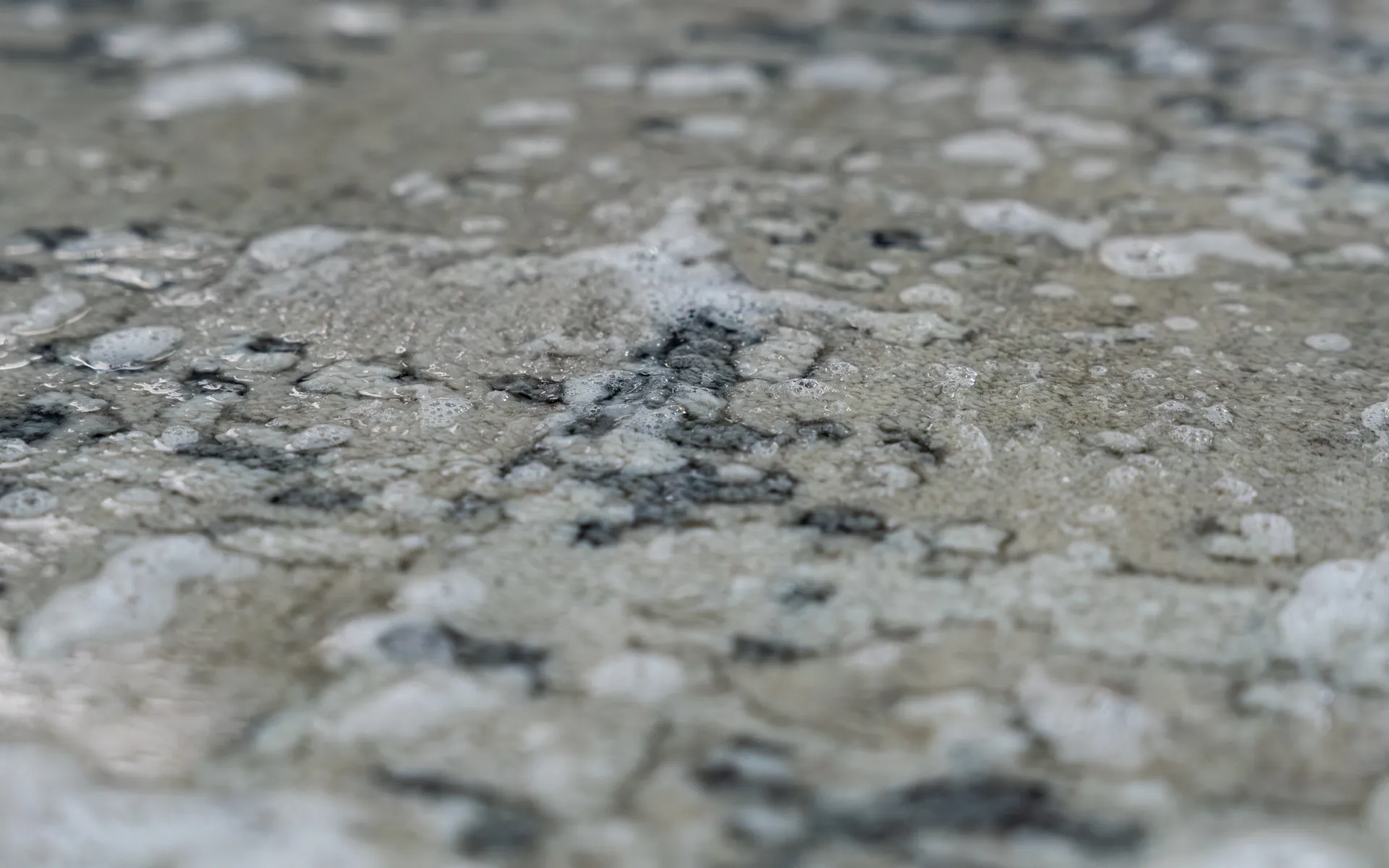
Knowing how to remove pet urine from a rug comes down to two things: how long the urine has been there and how deep it went. A fresh puddle is mostly a blotting job. Urine that dried days ago, reached the foundation or seeped into the pad is a different problem, and that is where many home remedies fall short.
This guide follows the clock, from the first minutes to old spots only a black light can find.
How to Remove Pet Urine From a Rug, by How Old the Accident Is
The older and deeper the urine, the less any surface treatment can do, so start by working out which stage you are dealing with.
| Stage | What is usually going on | Your first move |
|---|---|---|
| Still wet | Urine is in the pile and moving down | Blot hard, rinse with cool water, blot again |
| Dry but recent | Residue is in the pile and may have reached the foundation | One careful spot treatment with a fiber-safe product |
| Old or repeated | Urine has likely reached the foundation, pad or floor | Map the spots with a black light and plan a full wash |
| Smell returns after cleaning | Residue sits deeper than you treated | Stop spot cleaning and have the rug inspected |
| Silk, viscose or antique rug | The fiber or dyes may not tolerate water | Blot only and call a professional |
What to Do Right After a Pet Pees on the Rug
Blot up as much urine as you can before it dries, then rinse with cool water and blot again.
Speed matters: Cornell University's veterinary college notes that cleaning is most effective soon after an accident.
- Blot, never rub. Press a thick layer of paper towels onto the spot. WoolSafe, which tests cleaning products for wool, lists blotting, not rubbing, among its basic spot-removal rules.
- Add weight. Humane World for Animals (formerly the Humane Society of the United States) suggests covering the towels with newspaper, standing on the stack for about a minute, then repeating with fresh towels until the area is barely damp.
- Rinse with cool water. Dampen a clean white cloth with cool water and blot the area, working from the edge of the spot toward the center so you do not spread it.
- Blot dry again. Press with dry towels until no more moisture comes up.
- Neutralize the odor. Humane World recommends a high-quality pet odor neutralizer once the area is clean. Choose one labeled safe for your rug's fiber and use the cloth method below.
How to Get Dried Pet Urine Out of a Rug
Dried urine deserves one careful attempt at home: find every spot, treat each with a product labeled safe for the fiber, and dry it fast.
If the stain or smell survives that attempt, more product is unlikely to fix it, and every extra wetting adds risk.
Find Every Spot First
Dried urine is easy to miss, so Humane World suggests using a black light and lightly outlining each soiled area with chalk. Darken the room, scan slowly, and confirm each mark by look and smell before you treat it. Scan again after cleaning to see what remains.
Choose a Product Made for the Job
An enzymatic cleaner is a pet-stain product that uses enzymes to break down the residue behind pet odors instead of covering it with fragrance. Cornell's veterinary experts put the goal plainly: odors must be neutralized, not just deodorized, to escape a cat's keen sense of smell.
On wool, WoolSafe says to use only products carrying its approval, so look for a pet stain remover with that mark or a clear wool-safe label. Test it in an inconspicuous spot first and press a white cloth on the area to check for color transfer.
Apply It Without Over-Wetting the Rug
Follow the label's waiting time, but apply the product to a damp white cloth instead of pouring it on, and blot from the edge toward the center. WoolSafe's urine sequence then calls for blotting with clean water to remove residue.
Rule of thumb: if reaching the urine would mean wetting the rug all the way through, it is a wash, not a spot clean. WoolSafe notes that over-wetting greatly lengthens drying time and can discolor the pile.
Dry It Fast
The EPA advises drying wet materials within 24 to 48 hours to prevent mold growth. Prop the damp section up so air reaches the back, aim a fan at it, and run the air conditioning or a dehumidifier; the EPA recommends keeping indoor humidity below 60 percent, ideally between 30 and 50 percent. For larger accidents, see our guide on how to dry a wet rug.
Does Vinegar or Baking Soda Remove Pet Urine Smell?
Not reliably: both deodorize at most, and neither neutralizes the urine residue that keeps the smell, and your pet, coming back.
- Vinegar and ammonia both smell like urine, Cornell notes, and Humane World warns that strong odors like these may encourage pets to mark the spot again.
- Baking soda stays where you sprinkle it. It cannot reach urine that has wicked into the foundation or pad, so the surface may smell fresher while the source stays put.
- Dish soap and other household detergents should stay off wool rugs. WoolSafe warns they can cause rapid re-soiling, color bleeding or damage to the pile or backing.
- Steam and hot water are out. Humane World warns that heat can permanently set urine stains and odor into synthetic fibers, and wool and silk should never get hot water.
- Bleach in any form, hydrogen peroxide included, is off the list. WoolSafe's criteria for wool cleaning products rule out added bleaches, and it warns that additives can bleach or change color.
WoolSafe traces most wet-cleaning damage to over-wetting, too much mechanical action and unsuitable chemicals, which is why scrubbing in a homemade mix is riskier than it looks.
What If the Urine Reached the Foundation or Rug Pad?
Once urine reaches the foundation or pad, surface treatment cannot reach all of it, so the rug needs a full wash and the pad may need replacing.
The foundation is the woven base of warp and weft threads that holds the pile. The rug pad is the separate cushion or grip layer underneath. After any large accident, check both:
- Fold the rug back and look for a stain or ring on the back.
- Feel and smell the pad; a damp or discolored pad has absorbed urine.
A urine smell coming from the pad or the back of the rug means the urine went deeper than any spray can follow, and chasing it from the surface means wetting the whole thickness. A full wash treats the rug front to back instead.
Humane World notes that once urine reaches the padding, replacing it may be necessary; with an area rug, that simply means a new pad. Our guide to choosing a rug pad covers the options, and Bakers Rug Service cuts custom non-slip pads, with moth proofing available.
Is It Safe to Treat Pet Urine on Wool or Silk Rugs at Home?
Wool can be spot treated with care, but silk, viscose and antique rugs should be blotted and left to a professional.
- Wool: Spot treatment is reasonable on fresh accidents. WoolSafe warns that highly alkaline cleaners can make dyes bleed and, in extreme cases, yellow and weaken wool, and it lists old urine among stains that may need professional treatment.
- Silk and viscose: Blot with a dry white cloth and stop there. Our silk and viscose guide explains the risks.
- Synthetics such as polypropylene, nylon and polyester: Follow the maker's care label and keep heat away.
- Jute, sisal and seagrass: Blot and use as little moisture as possible; plant fibers need their own approach.
- Antique, heirloom or hand-dyed rugs: If you do not know how the dyes will react, do not experiment; on a valuable rug, an expert inspection is the safer test.
How to Stop a Dog or Cat From Peeing on the Rug Again
Pets return to spots that still smell like urine, so thorough odor removal comes first.
Cornell's veterinary experts note that cats re-soil and spray areas they have marked with their scent, and that odor neutralizers applied wherever a cat has sprayed may keep it from spraying there again. That is why the black light scan matters: treat every spot it finds, not only the accident you saw. During retraining, roll the rug up for a while or move furniture over the spot.
For rug choices and routines that suit a pet household, see our guide to rugs and pets in South Florida. If a stale smell lingers after the urine is gone, dampness may be the cause, and our guide to getting a musty smell out of a rug covers that.
When to Call a Professional
Call a professional when the urine is old, repeated, deep in the rug, or on a fiber you cannot safely wet.
- The stain or smell comes back after the spot dries.
- You can see the stain on the back, or the pad is damp or discolored.
- Color bleeds onto your white cloth or shifts during cleaning.
- The rug is silk, viscose, antique or hand-dyed.
Bakers Rug Service offers pet stain and odor treatment alongside its hand wash. Each rug is inspected for dye stability, stains and structural damage, deep-dusted to remove embedded dry soil, washed by hand with gentle pH-neutral solutions and air-dried in a climate-controlled environment to prevent mold and shrinkage. A full wash treats the whole rug, not just the spot you can see.
Pickup and delivery are complimentary across Miami-Dade, Broward and Palm Beach counties, including Kendall and Cutler Bay, near our shop at 8723 SW 132 St.
Not sure whether your rug needs more than a careful blot? Tell us about the accident or call (305) 232-3368 for a free estimate.
Frequently Asked Questions
Can I put a small washable rug in the washing machine after a pet accident?
Only if its care label says it is machine washable. For washable items, Humane World for Animals suggests adding a one-pound box of baking soda to your regular detergent, washing as usual and air drying if possible. If you can still see or smell the soiling afterward, wash it again with an enzymatic cleaner. Hand-knotted rugs, and anything without a washable label, should stay out of the machine.
Can pet urine damage the floor under a rug?
It can. Humane World for Animals explains that when a wood floor discolors, the varnish or paint has reacted to the acid in the urine, and that finish may need to be removed and replaced. Whenever an accident goes through the rug, lift it, let the floor dry completely and inspect the finish before the rug and pad go back down.
When can my pet walk on the rug again after an enzyme treatment?
Wait until the treated area is completely dry. The ASPCA advises letting enzyme-based cleaners dry before pets return to any area where they were used. Keeping your pet off the spot while it dries also prevents fresh accidents on a damp area and gives you an honest smell test once the rug is dry, which is the moment to judge whether the odor is truly gone.
Should I throw away a rug my cat has peed on many times?
Not until someone has examined it. Old, repeated accidents are harder to clean, but whether a rug is worth saving depends on its fiber, dyes, construction and what it means to you, not on the smell alone. An inspection before washing shows what a hand wash can realistically achieve, and estimates at Bakers Rug Service are free, so you can decide with the facts in front of you.
Should my pet see a vet if accidents on the rug keep happening?
Yes, especially if a pet that was reliably house-trained starts having accidents. Cornell University's veterinary college recommends taking a house-soiling cat to the veterinarian for a thorough physical examination, noting that a cat can have an underlying problem without showing it. Ruling that out first means your cleaning and retraining efforts are aimed at the right cause.
Not Sure This Is a DIY Job?
Tell us the rug's fiber, the age of the accident and whether it reached the back. We'll help you decide if home care is enough or the rug needs a hand wash, and estimates are free.
Sources
- How to Remove Pet Stains and Odors (Humane World for Animals)
- Feline Behavior Problems: House Soiling (Cornell University College of Veterinary Medicine)
- Poisonous Household Products (ASPCA)
- The Cleaning and Maintenance of Wool Carpets (The WoolSafe Organisation, 2020)
- The Safe Way to Care for Your Wool Carpets and Rugs (The WoolSafe Organisation, 2020)
- A Brief Guide to Mold, Moisture and Your Home (US EPA)