How to Choose a Rug Pad for Hardwood Floors, Tile, and Carpet
Felt, rubber, or both? Match the pad to your floor's finish and your rug's weight, size it right, and skip the backings flooring makers warn can stain.
By Bakers Rug Service · Hand-washed rug care in Miami since 1940
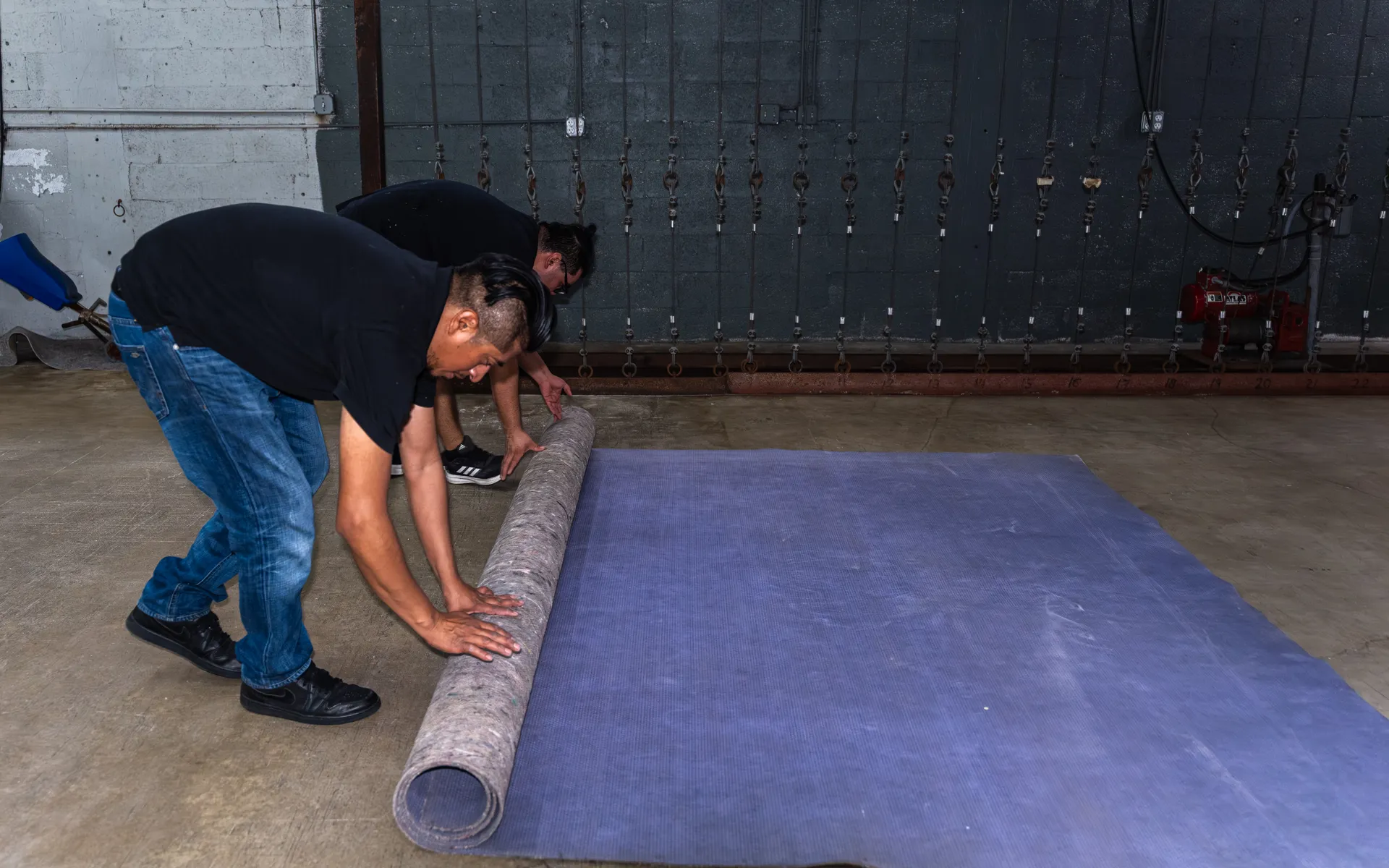
Choosing a rug pad for hardwood floors comes down to three questions: what your floor's finish can tolerate, how much grip the rug needs, and how much cushion you want underfoot. The same questions apply on tile, stone, vinyl, laminate, and carpet, but the answers change from floor to floor. This guide works through pad materials, floor-by-floor picks, thickness, sizing, and the signs a pad has worn out, drawing on published guidance from flooring and pad manufacturers, a national building authority, and textile conservators.
Do You Need a Rug Pad?
For most rugs on most floors, yes, because a pad does three jobs a rug can't do on its own: it holds the rug in place, cushions it, and keeps its back off your floor.
Grip stops a rug from sliding and bunching, and a rug that bunches turns into a trip hazard. Cushion adds comfort underfoot, and one pad maker sums up the job as comfort, grip, and a cleaner fit while helping protect the floor.
There is one notable exception. Some rugs come with a built-in grip backing, and their makers may say no separate pad is needed, so follow that rug's own instructions.
A pad works alongside routine care rather than replacing it. Our guide on how to vacuum an area rug covers the other half of keeping a rug in good shape.
Felt vs Rubber Rug Pad: What Each Material Does
Felt adds cushion, natural rubber adds grip with very little height, and a dual-surface pad that pairs the two gives you both.
Felt pads are dense mats of fiber, often needle-punched, which means barbed needles lock the fibers together without weaving. Bona, a maker of wood-floor finishes and care products, notes that felt gives great cushion but can lack grip, while natural rubber is great for keeping rugs in place but offers little cushion.
| Pad type | What it does well | Trade-off | Typical fit |
|---|---|---|---|
| Felt | Cushion and a soft layer under the rug | Little grip on its own | Large rugs held down by furniture |
| Natural rubber | Strong grip, thin profile | Little cushion | Runners, small rugs, rugs near doors |
| Felt-and-rubber (dual-surface) | Cushion plus grip | Thicker; check the rubber type | Most rugs on hardwood and tile |
| PVC or plastic mesh | Grip | Plasticizers can mar some finishes | Only where your floor maker allows it |
Two label terms matter. A plasticizer is an additive that keeps plastic or rubber flexible, and flooring company Flooret explains that plasticizers can migrate into sealed finishes and discolor vinyl, laminate, and lacquered or UV-cured hardwood alike. The words natural rubber aren't the whole story, either: Flooret warns that sprayed-on or liquid latex carries the same risk as synthetic rubber, even when it is marketed as natural.
Match the pad to the rug as well as the floor:
- Heavy hand-knotted rugs anchored by a sofa or bed: cushion matters more than grip, so felt or felt-and-rubber.
- Antique and other valuable rugs: the Canadian Conservation Institute (CCI) rules out self-adhesive, foam rubber, vinyl, jute, and recycled felt underlays for carpets, so ask exactly what a pad is made of.
- Thin flatweaves such as kilims and dhurries (rugs woven without pile): grip comes first, so natural rubber or felt-and-rubber.
- Runners and small rugs in walkways: a grippy pad that keeps the edges flat.
- Rugs near doors: thin natural rubber, which Bona points to for low-clearance spots such as rugs under doors.
Which Rug Pad for Hardwood Floors Won't Harm the Finish?
For finished hardwood, choose felt, natural rubber, or a felt-and-rubber pad, the materials Bona points to for wood floors.
The risk with some pads is chemical, not mechanical. Bona warns that PVC pads can damage floors if off-gassing plasticizers eat into the finish, and that some low-grade pads are treated with chemicals that can stain or stick to floors. Adhesive is the other hazard: Flooret notes that adhesive-backed rubber leaves sticky residue and can pull up the surface coating when removed.
Double-sided rug tape relies on adhesive too, so keep it off a finished floor unless the floor maker approves it.
Before you buy: read your floor's care guide. Advice varies by product, and pad makers themselves tell buyers to confirm compatibility with the flooring manufacturer. If the guide rules out rubber- or latex-backed mats, hold a pad's backing to the same standard.
If an old pad has already stuck to the finish, Bona suggests dampening the residue with hardwood floor cleaner and lifting it with a plastic scraper. It adds that solvents such as mineral spirits can soften or change the sheen of a finish and may even remove it, so test in an inconspicuous spot first. Leave extensive damage to a wood floor professional.
Which Rug Pad for Tile Floors, Stone, Vinyl, Laminate, or Carpet?
Match the pad to your floor's weak spot: grip on slick tile, a stain-safe backing on stone, vinyl, and laminate, and a pad made for carpet on carpet.
| Floor | Main concern | Look for | Be careful with |
|---|---|---|---|
| Ceramic or porcelain tile | Slipping | Natural rubber or felt-and-rubber | Felt alone |
| Natural stone | Staining | A pad your stone supplier approves | Rubber- or jute-backed rugs and mats |
| Vinyl and luxury vinyl plank | Permanent staining | Colorfast, non-staining products | Rubber or latex backings |
| Laminate | Discoloration | A pad your floor maker approves | Plasticizers and adhesives |
| Carpet | Shifting and wrinkling | A pad made for use on carpet | Pads designed only for hard floors |
If you live in a high-rise, pair this table with our guide to rug care for Miami condos and high-rises.
Ceramic and porcelain tile
A rug pad for tile floors is mostly about grip, so a natural rubber or felt-and-rubber pad that holds the rug on a smooth, hard surface is the usual choice. If your tile is natural stone rather than ceramic or porcelain, read the next section first.
Natural stone
Marble, travertine, and limestone call for more care. Singapore's Building and Construction Authority cautions that rubber- or jute-backed mats and rugs may themselves stain natural stone. Ask your stone supplier or installer which pad materials suit your stone and its sealer.
Vinyl and luxury vinyl plank
Armstrong Flooring says the antioxidant that keeps rubber and latex backings from turning brittle can permanently stain its vinyl floors. Instead, it allows rugs labeled colorfast (dyed so the color won't bleed or rub off) and recommends non-staining, vinyl-backed mats or woven rugs. Brands differ, though: Flooret allows adhesive-free natural rubber pads on its floors, so your own floor's care guide is the tiebreaker.
Laminate
Flooret lists laminate among the floors that plasticizers can discolor. Choose a pad your laminate maker approves, and skip adhesive backings.
Carpet
A rug laid over carpet needs a pad designed for that job rather than one made only for hard floors. If the pad is reversible, check the label for which face goes down on carpet.
How Thick and How Big Should a Rug Pad Be?
Use the thinnest pad that gives you the grip and cushion you need, and size it to sit just inside the rug's edges, typically 1 to 2 inches.
Thicker felt adds cushion, while thin natural rubber adds grip without height. Before you buy, check that the rug and pad together will clear any door that swings over them. For antique and valuable carpets, CCI suggests an underlay 1/8 to 1/4 inch (3 to 6 mm) thick.
Pad maker Well Woven tells buyers to choose a pad that sits 1 to 2 inches inside each rug edge, which keeps the pad from showing or catching toes and vacuum heads. CCI's guidance has the underlay reach the edge of the carpet instead, so under an antique, keep the margin small and the border supported. Measure the woven body of the rug, not the fringe. To trim a pad at home:
- Lay the pad on a clean floor and center the rug on top.
- Fold back half the rug and mark the pad 1 to 2 inches inside the rug's edge.
- Cut along the mark with sharp household scissors, then repeat on the other half.
- Lay the rug flat and walk the perimeter; no pad should show.
Round, oval, and odd-size rugs are harder to get right by hand. If you'd rather not cut one yourself, Bakers Rug Service makes custom-cut non-slip rug pads, with moth proofing available.
When Should You Replace a Rug Pad?
Replace a pad once it stops doing its job: when it slides, crumbles, sticks to the floor, or leaves marks.
The easiest time to check is whenever the rug comes up for cleaning. Look at the floor for residue or discoloration, and at the pad for brittle, flaking, or flattened areas. Warm rooms deserve extra attention in South Florida, because Flooret warns that old plastic mesh pads break down and leave residue in warm temperatures.
If you clean a small rug yourself with our guide on how to wash a rug at home, let the rug, pad, and floor dry completely before you put them back together.
When to Call a Professional
Call in help when the problem is bigger than the pad, such as a finish that is already stained or stuck, fringe or edges that are fraying, or a valuable rug that needs an exact fit.
Damage to a wood finish belongs with a wood floor professional. For the rug itself, Bakers Rug Service can help: we hand-wash rugs individually at our shop at 8723 SW 132 St in Miami's Kendall area, repair fringe, and rebind edges. You can see everything we offer on our services page.
Pickup and delivery are complimentary across Miami-Dade, Broward, and Palm Beach counties, including Coral Gables and South Miami.
Not sure which pad suits your rug and floor? Request a free estimate or call (305) 232-3368 with your rug's size, its fiber, and the floor it sits on.
Frequently Asked Questions
Can a felt rug pad attract moths?
It can if the felt contains wool, since the Canadian Conservation Institute notes that some moths and carpet beetles feed on wool and other fibers. Ask what a felt pad is made of before you buy it. Then check the pad's underside whenever the rug comes up for cleaning, paying closest attention to rugs that sit under furniture and rarely move.
Can I wash or vacuum a rug pad?
Only if the pad's maker lists that method. One rug-pad manufacturer tells owners not to add water or cleaner, vacuum, or use any machine on its pads unless the method is explicitly listed for that pad. While the rug is up, sweep or dust-mop the floor underneath. If a pad is soiled, crumbling, or sticky, replacing it is usually simpler than trying to clean it.
Can I reuse my old rug pad under a new rug?
Yes, if it still grips, isn't brittle or sticky, and is big enough to trim so it sits inside the new rug's edges. A pad that stops well short of the edges leaves the rug's border unsupported. Recheck the floor, too: a pad that suited tile may not suit vinyl, laminate, or stone, where rubber and latex backings raise staining concerns.
How soon can a rug pad go on a newly refinished floor?
Wait until the finish has fully cured, and get that timing from your finisher or the finish manufacturer rather than a rule of thumb, because cure times vary by product. One rug-pad maker likewise points owners of newly finished, heated, or specialty floors to the flooring manufacturer's guidance. Until the finish is ready, keep both the rug and the pad off it.
What should I have ready when ordering a custom-cut rug pad?
Have the rug's length and width with the fringe excluded, its shape, and the floor it will sit on, especially if that floor is stone, vinyl, laminate, or carpet. Note any door that swings over the rug and any heavy furniture that sits on it. Bakers Rug Service gives free estimates, so call (305) 232-3368 or use our contact form to start.
Get a Clear Estimate Before You Choose a Pad
Tell us your rug's size, fiber, and floor type. We'll suggest a custom-cut non-slip pad and give you a free estimate before you decide anything.
Sources
- Best Rug Pads for Wood Floors (Bona)
- Flooring FAQs: rugs and mats on vinyl floors (Armstrong Flooring)
- What Rugs and Rug Pads Can I Use on Flooret Floors? (Flooret)
- Natural Stone Finishes, 8.0 Maintenance (Building and Construction Authority, Singapore)
- Basic Care: Carpets and Rugs (Canadian Conservation Institute)
- Elle Basics Rug Pad: Rug Pad FAQs on sizing and floor compatibility (Well Woven)