How to Store a Rug Properly: Rolling, Wrapping, and Avoiding Mold
A step-by-step guide to rug storage: clean and dry the rug, roll it the right way for its weave, wrap it in breathable cotton and keep Miami humidity, pests and creases away.
By Bakers Rug Service · Hand-washed rug care in Miami since 1940
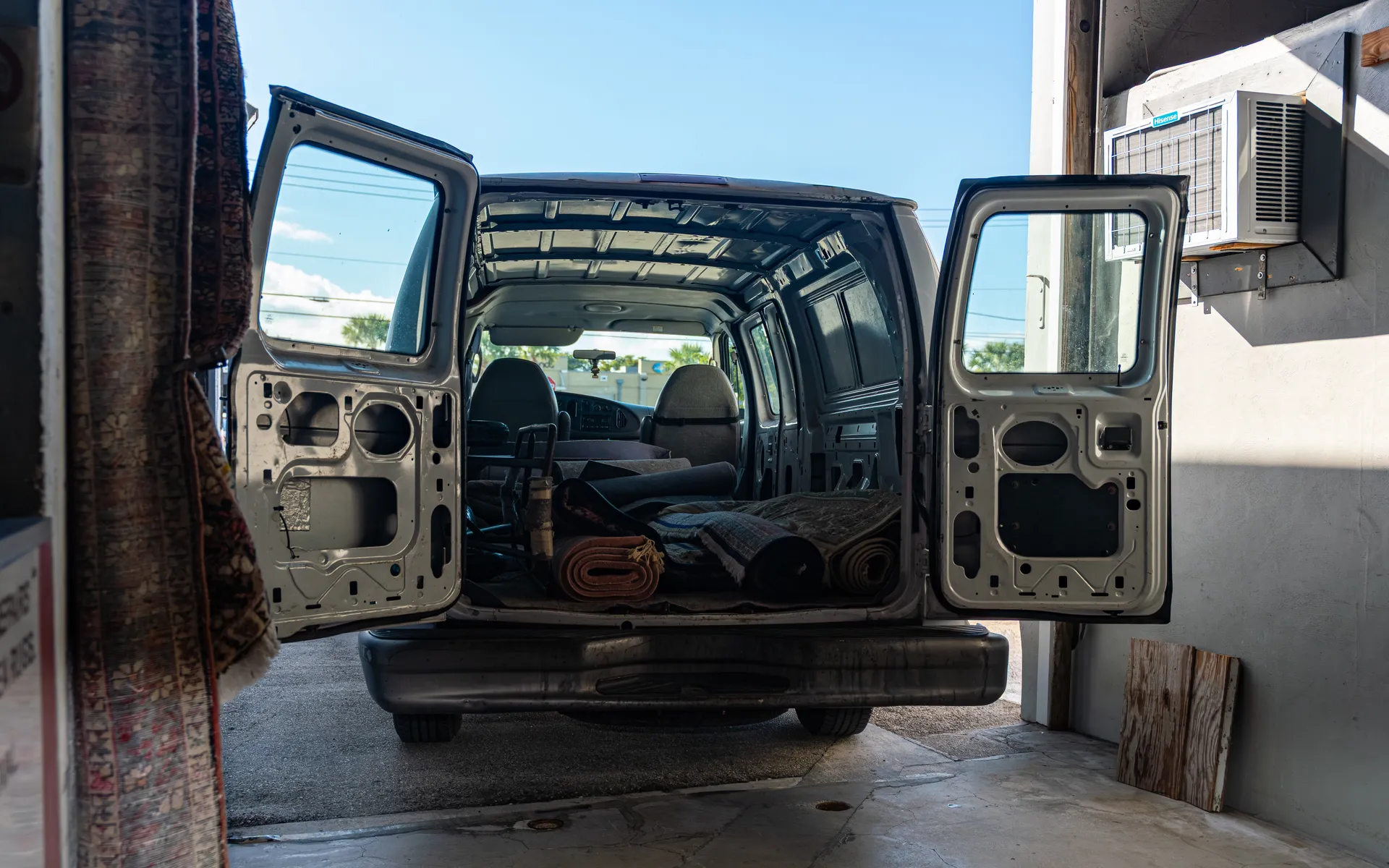
Knowing how to store a rug comes down to keeping four things away from it: dirt, moisture, creases and pests. The steps below follow guidance from the Canadian Conservation Institute (CCI), Icon (the UK's Institute of Conservation) and Florida's cooperative extension service.
How to Store a Rug: What You Need Before You Start
You need a sturdy tube, an interleaving layer, a breathable cotton wrap and, for anything bigger than a doormat, a helper.
- A wide tube longer than the rug is wide. CCI advises against rolling without one and calls for a large-diameter tube for carpets. Oklahoma State notes that carpet dealers have large rollers for heavy textiles.
- A tube barrier. Cardboard is acidic, so CCI covers the tube with polyethylene or polyester (Mylar) sheeting; Oklahoma State suggests acid-free tissue or washed muslin.
- Unbuffered acid-free tissue or a washed cotton sheet to roll in between the layers. Buffered tissue carries an alkaline reserve that CCI warns can damage wool, silk and some dyes.
- A cotton sheet or unbleached muslin for the outer wrap, plus wide cotton tape.
- A hygrometer, a small gauge that reads relative humidity, for storage longer than a few weeks.
Why Must a Rug Be Clean and Completely Dry Before Storage?
Store a rug only when it is clean and dry, because soil feeds pests and mildew and trapped moisture can grow mold inside the roll.
Icon notes that pests thrive in dusty areas and that wool is particularly susceptible to moths and carpet beetles. Palm Beach County's extension office lists dust, dirt and food spills as mildew nutrients and says mildew "thrives in the cozy carpet pile."
- Lightly used and spot-free: vacuum the face slowly in the direction of the pile with a plain suction head on low suction, never a power head, as CCI advises. Then vacuum the back.
- Spills, pet accidents, sand or heavy traffic: wash it first, or the residue keeps feeding pests and mildew in the dark.
Bakers Rug Service washes every rug by hand, one at a time and never by machine, then air-dries it in a climate-controlled environment to prevent mold and shrinkage. See our rug washing and repair services for the full process.
Dry means dry all the way through. The EPA advises drying wet items within 24 to 48 hours to prevent mold growth, and a rug rolled damp seals that moisture in. After a home wash, follow our guide on how to dry a wet rug and check the back and fringe, not just the surface. Keep the air conditioning on while it dries; Florida extension guidance warns that opening windows, even on cooler evenings, lets in saturated outside air.
How to Roll a Rug for Storage: Pile Out, With the Pile
Roll a pile rug face down so the pile ends up on the outside, moving in the direction the pile lies, as both CCI and Icon instruct.
Pile is the layer of yarn tufts that forms a rug's surface, and on hand-knotted rugs it leans toward one end. Run your palm along the length: one way feels smooth, the other rough. Start rolling at the end where the smooth stroke begins, so the roll follows the pile instead of crushing it.
Some guides say to roll pile-in, but conservators roll pile rugs pile-out, which keeps the tufts from being squeezed together inside each turn.
- Lay the rug face down on a clean floor and smooth out every ripple. Never fold it first to shorten the roll; CCI warns against it.
- Wrap a strip of cotton around the covered tube, leaving a flap (a leader, in CCI's term) to tuck under the starting edge of the rug.
- Lay tissue or a washed cotton sheet over the back of the rug so it rolls up between the layers.
- With one person at each end, roll slowly and evenly, edges aligned, with gentle and uniform tension.
- Tie the roll loosely in several places with cotton tape.
Adjust the method to the weave:
| Rug type | Which side faces out | What to know |
|---|---|---|
| Hand-knotted wool pile (Persian, Oriental, Turkish) | Pile out, rolled with the pile. | Interleave with unbuffered tissue or washed cotton. |
| Silk or silk-blend pile | Pile out, rolled with the pile. | Use unbuffered tissue only, since buffered tissue can harm silk. |
| Flat-woven, such as a kilim | Face in. Lay it face up and roll. | CCI rolls flat textiles face up so the face rolls inward. |
| Machine-made or tufted, with a backing | Follow the maker's care label. | Stop if the backing feels stiff or cracks as it bends. |
| Fragile, brittle or damaged | Don't roll it yet. | CCI advises keeping weak textiles flat, so have it assessed. |
Plastic around the tube is fine; plastic around the rug is not. Sheeting on a cardboard tube blocks the cardboard's acidity. Sealing the whole rug in plastic holds moisture against the fibers.
How to Wrap a Rug for Storage Without Trapping Moisture
Wrap the roll in something that breathes, such as a washed cotton sheet or unbleached muslin, and never seal it in plastic.
Oklahoma State University's extension guide to storing textiles says not to use plastic bags and warns that dry-cleaning bags hold moisture, which promotes mildew. Icon recommends a washed, white cotton dust sheet, and CCI adds that cotton covers can be laundered and reused.
- Cover the full length and tuck the sheet over both tube ends to keep dust out.
- Tie it loosely so the roll can't spring open.
- Keep regular tissue paper and uncovered cardboard off the rug; the Oklahoma State guide lists both as materials to avoid.
- Label the roll with the rug's size, the date and which side faces out. CCI suggests adding a photo.
Where Should You Store a Rug Long Term?
Store a rug long term lying horizontally, off the floor and in the dark, inside the air-conditioned part of your home.
- Off the floor and horizontal. For heavy items such as rugs, CCI runs a sealed wooden dowel or metal pipe through the tube and suspends the roll; a sturdy closet shelf is the household version. Don't stand a roll on end.
- Nothing stacked on it. Oklahoma State advises against stacking rolled textiles, and CCI keeps neighboring rolls from touching.
- Not against raw wood. The Oklahoma State guide warns that acids in wood break down textile fibers, so line wooden shelves with washed cotton.
- Not in the attic or garage. CCI and Oklahoma State both rule out attics and basements, where heat and humidity swing, and an unconditioned Florida garage or shed is no better. Heat makes wool lose its natural oils and weakens the threads, CCI explains, while high humidity damages fibers and can make colors bleed.
- Out of the light. Light dries fibers and fades colors, so pick a dark closet.
How to Prevent Mold in Rug Storage in Miami's Humidity
Keep the storage space below 60 percent relative humidity, the ceiling the EPA recommends for homes, and check the rug on a schedule.
Relative humidity (RH) is the moisture in the air compared with the most it could hold at that temperature. The EPA recommends indoor RH below 60 percent, ideally 30 to 50 percent. Icon notes that RH above 65 percent encourages mold that can leave irreversible stains. Afternoon rains keep South Florida humid, so build a few habits:
- Choose an interior closet in air-conditioned space, away from outside walls, air-conditioning vents, bathrooms, kitchens and laundry rooms, the spots the Oklahoma State guide warns against for displayed textiles.
- Leave the air conditioning on when you travel. Florida extension guidance notes that it removes moisture from indoor air.
- Keep the hygrometer in the closet. If it keeps reading above 60 percent, add a dehumidifier or move the rug.
More year-round tips are in our guide to rug care in Miami's humidity, salt air and sun.
What to look for at each check
Icon calls an annual check of stored items essential; in Miami's climate, a look every few months is a sensible upgrade. Open the wrap and look for:
- A musty smell, damp spots, or fuzzy or powdery discoloration.
- Silky webbing, small cases, shed larval skins or bare patches, signs explained in our guide on how to prevent moths and carpet beetles.
- Chewed holes in the wrap, a sign of the rodent damage Oklahoma State says to check for.
Then turn the roll partway so no single area takes the strain, and launder the cotton wrap at least once a year. Oklahoma State recommends both, noting that aging cotton produces acid.
How to Unroll a Rug After Storage
Unroll a stored rug slowly on a clean floor, with a helper for anything large, and inspect it as it opens.
- Carry the roll with one person at each end, as CCI recommends, rather than dragging it.
- Unroll it where it will lie, checking both sides for the signs above.
- Let it rest flat. Curled ends usually relax with time, so don't iron, steam or force them backward.
- Vacuum gently in the direction of the pile and set the rug back on its pad.
- If it smells stale, air it in a dry, air-conditioned room out of direct sun, which fades color. For a lingering odor, see how to get a musty smell out of a rug.
When to Call a Professional
Call a professional when a rug is fragile, valuable or heavily soiled before storage, or when it comes out with mold, moth damage or an odor that won't fade.
Act fast on mold, because the EPA cautions that porous materials such as carpet may have to be thrown away once they become moldy.
Bakers Rug Service, at 8723 SW 132 St in the Kendall area, hand-washes rugs individually and handles repair and restoration, from fringe repair and hole reweaving to moth damage repair. Estimates are free, and pickup and delivery are complimentary across Miami-Dade, from Homestead to Hialeah, and in Broward and Palm Beach counties.
Not sure whether your rug needs a wash before it goes into the closet? Call (305) 232-3368 or tell us about your rug, and we'll help you decide whether it's a job for your vacuum or for us.
Frequently Asked Questions
Can I store a rug in a vacuum-seal bag or plastic tote?
No. A vacuum bag is sealed plastic, which traps moisture against the fibers, and Oklahoma State University's extension guide says not to store textiles in plastic bags. The compression also flattens the pile and forces the rug into folds. An airtight plastic tote raises the same moisture concern. A roll wrapped in a cotton sheet and resting on a shelf stays protected from dust while the fibers can still breathe.
Can I fold a rug for storage if I am short on space?
Only as a last resort. The Canadian Conservation Institute advises avoiding folds whenever possible, because creases can leave permanent marks or break threads. If a small, flexible rug must be folded, Oklahoma State University's extension guide suggests padding each fold with a roll of washed cotton and refolding along new lines every six to twelve months. Never fold an old or brittle rug.
Is a climate-controlled storage unit safe for a rug?
It can be, as long as the unit controls humidity and not just temperature. Ask the facility how it manages moisture, and take a hygrometer along on your first visit if you can. Keep the rug clean, dry and wrapped in cotton on a shelf or pallet rather than the concrete floor, with no boxes resting on it. In South Florida, an unconditioned unit is a poor home for wool or silk.
How long can a rug stay in storage?
There is no fixed limit, because conditions matter more than the calendar. A rug that went in clean and dry, rolled on a tube and wrapped in cotton, and that sits in steady air-conditioned conditions, can stay stored for years. Neglect is what ends storage badly, so treat the inspection schedule as part of the plan and unroll the rug fully if anything looks or smells off.
Not Sure Your Rug Is Ready for Storage?
Tell us about your rug and we'll help you decide whether a careful vacuum is enough or it needs a hand wash before it goes into the closet. Estimates are free.
Sources
- Basic care: Carpets and rugs (Canadian Conservation Institute)
- Rolled Storage for Textiles, CCI Notes 13/3 (Canadian Conservation Institute)
- Carpets and Rugs, Caring for Your Treasures (Icon, The Institute of Conservation)
- A Brief Guide to Mold, Moisture and Your Home (U.S. Environmental Protection Agency)
- Avoid Mildew: Keep It Clean and Dry (Palm Beach County Cooperative Extension)
- Storage and Display of Heirloom Textiles in the Home (Oklahoma State University 4-H Extension)