How to Vacuum an Area Rug: Fringe, Beater Bars, and Delicate Weaves
When to switch off the beater bar, how to handle fringe, which way to push and when to flip the rug: a rug-by-rug vacuuming guide for hand-knotted, shag and delicate rugs.
By Bakers Rug Service · Hand-washed rug care in Miami since 1940
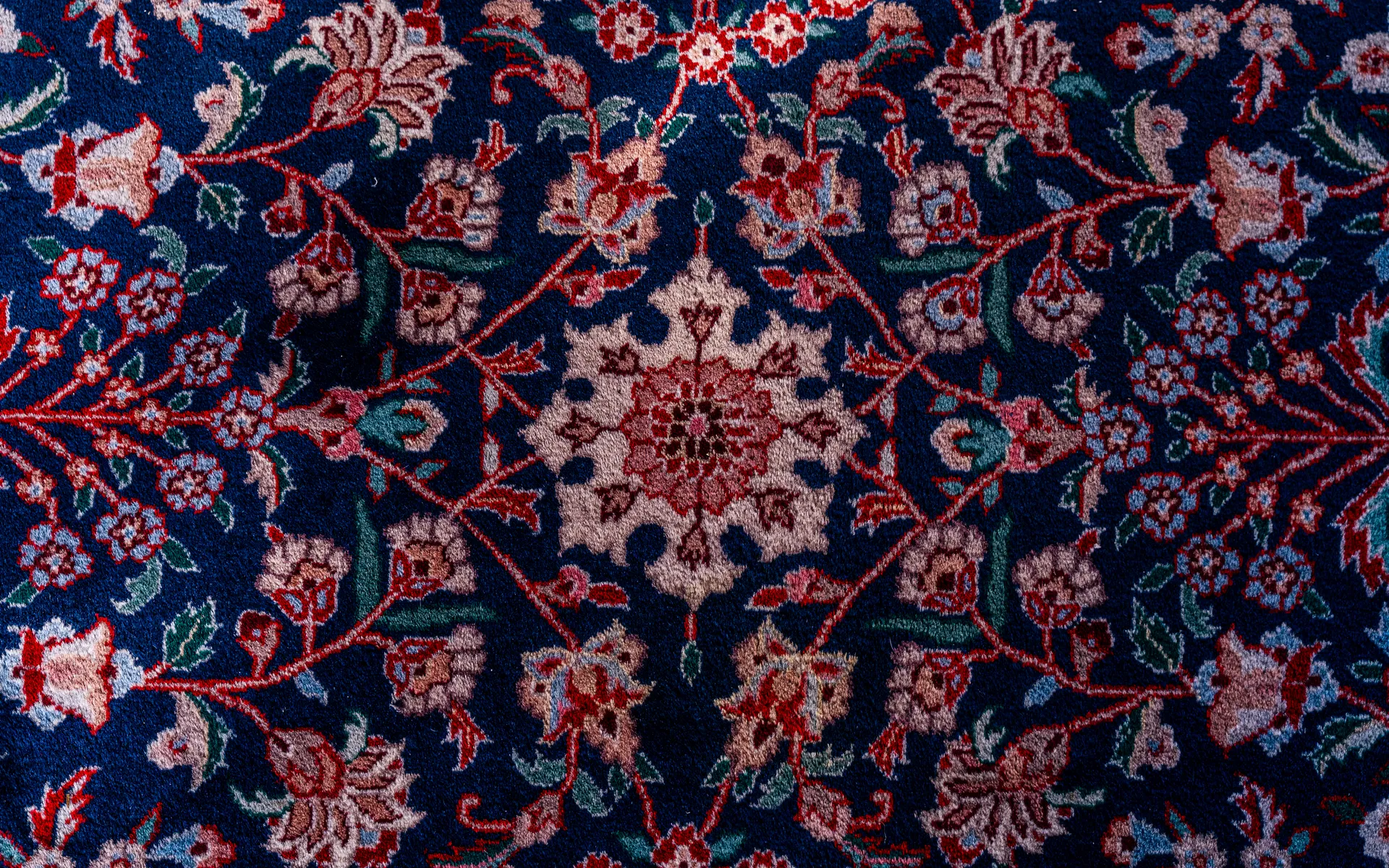
Dry grit wears a rug down: it settles into the pile and grinds against the fibers underfoot, and regular vacuuming is how you get it out. Knowing how to vacuum an area rug without damaging it comes down to three choices: whether the brush roll spins, which way you push, and what you do at the fringe.
How to Vacuum an Area Rug, Step by Step
For almost any rug, the safe default is suction only, slow overlapping passes in the direction the pile lies, and a stop just short of the fringe.
- Clear and inspect. Pick up anything the vacuum could swallow, and leave loose yarn, open edges or thin spots alone, since suction can pull loose fibers out.
- Find the pile direction. Pile is a rug's surface yarn. Run your palm along it: it feels smooth with the pile and rough against it.
- Pick the setting. Turn the brush roll off unless the rug is a sturdy machine-made cut pile (see the table below).
- Go slowly. The Carpet and Rug Institute (CRI) warns that a quick once-over doesn't do much, so make slow, overlapping strokes and give traffic lanes extra passes.
- Let the vacuum glide. Pressing the head down sharply increases the pull on the fibers.
- Finish the edges, then the fringe. Run a crevice tool along edges and corners, where dust builds up, then treat the fringe as a separate job.
Should You Use a Beater Bar on an Area Rug?
On most handmade rugs, no: switch the beater bar off and use suction alone, saving the spinning brush for sturdy machine-made cut-pile rugs. A beater bar, also called a brush roll or power head, is the rotating cylinder of bristles in the vacuum head, and on the wrong rug it roughs up the pile, snags loops and long yarns, and chews fringe.
Consumer Reports calls the rotating brush of a newer upright too harsh for Oriental rugs, and the Canadian Conservation Institute (CCI) rules out upright vacuums and beater-bar power heads entirely for heritage textiles. Carpet maker Shaw Industries recommends a rotating brush, set so it just touches the pile, for cut-pile wool carpet laid over a pad, but suction only for loop pile.
To vacuum hand-knotted rugs, including traditional Persian and Turkish pieces, use the brush-off setting or a canister's plain floor tool. If you aren't sure how a rug was made, treat it as the more delicate type.
| Rug type | Brush roll | How to vacuum it |
|---|---|---|
| Hand-knotted wool (Persian, Oriental, Turkish) | Off | Suction-only floor tool, with the pile |
| Antique, fragile, silk or viscose | Off | Lowest suction and light strokes; a screen for fragile pieces |
| Shag or long pile | Off | Suction only, then rake the pile so it lies one way |
| Thick loop pile | Off, or raised clear of the pile | Strong suction; loops are sensitive to brushing |
| Flatweave (kilim, dhurrie) | Off | Both sides; lower the suction if the rug lifts |
| Jute, sisal and other plant fibers | Off unless the label allows it | Often, on both sides, plus the floor beneath |
| Machine-made cut pile | On, at the right height | Raise the brush fully, then lower it until it just touches the pile |
Before using a brush roll on a machine-made rug, test it in an inconspicuous spot and check for fuzzing or loose fibers.
Can You Vacuum Rug Fringe?
Yes, but gently, with low suction and no spinning brush, which can grab the strands, wrap them around the roller and snap them. On a hand-knotted rug, the fringe is the exposed end of the warp, the threads that run the length of the rug, so it is part of the foundation rather than trim. On many machine-made rugs it is sewn on.
The technique comes from CRI and Consumer Reports guidance:
- Vacuum from the center of the rug toward each end with gentle suction, and lift the head before it reaches the fringe.
- Clean the fringe itself with a small nozzle on low suction, either with an old nylon stocking stretched over it or with the brush switched off.
- Lift the end of the rug and vacuum the floor beneath the fringe.
If the fringe is already matted, broken or worn close to the knots, stop vacuuming that end; our rug repair and restoration guide explains the options.
How to Vacuum Antique, Silk and Other Delicate Rugs
Use the lowest suction, no brush roll and a protective screen, and if a rug is brittle, threadbare or losing knots, don't vacuum it at all. Delicate rugs include antiques, rugs with worn foundations, and silk or viscose pile; viscose is a fiber made from regenerated plant cellulose, often sold as art silk or bamboo silk.
The Screen Method
CCI describes the method textile conservators use:
- Cut nylon or polyethylene screening, 18 to 20 mesh, to a size you can handle, and sew cotton tape over the cut edges so they can't snag the rug.
- Lay the screen on one section and set the suction just high enough to lift dirt without lifting the rug.
- Vacuum gently in the direction of the pile, without pressing the nozzle down.
- Lift the screen onto the next section instead of dragging it, and cover the fringe with it too.
- Turn the rug over and repeat on the back.
Pressure matters more than the machine. In Smithsonian conservation tests, pressing a brush attachment down into a textile raised the suction on it roughly tenfold. A screen cut airflow by about a third, but offered very little protection once the brush was pushed down. The study's conclusion: the hand of the person doing the cleaning matters most.
CCI advises against cleaning textiles that are extremely fragile or have powdering fibers, so a rug that crumbles or sheds knots needs a professional. For silk and viscose, see our silk and viscose rug guide.
Which Direction Should You Vacuum a Rug?
Vacuum with the pile, in the direction its fibers naturally lean, as both Consumer Reports and CCI advise. Pushing against the lean leaves the pile standing up and uneven, so finish any cross pass with strokes that follow the pile. Flatweaves have no pile, so follow the warp or weft, the lengthwise or crosswise threads of the weave.
Should You Vacuum Both Sides of a Rug?
Yes, occasionally: Consumer Reports notes that gritty dirt abrades a rug's backing, and CCI's method ends by repeating the process on the reverse. Do it whenever you rotate the rug, which Shaw suggests every 3 to 6 months to keep its appearance even. Flip it, vacuum the back with suction only, then vacuum the pad and the floor before laying it back down.
While it's flipped, check the back and the sections that sit under furniture for signs of moths; our guide to preventing moths and carpet beetles shows what to look for.
Rug Vacuum Tips: Mistakes That Shorten a Rug's Life
The habits that wear rugs out early are a spinning brush on the wrong rug, catching the fringe, pulling sprouts, letting the vacuum clog and ignoring the pad.
- Leaving the beater bar on for hand-knotted or shag rugs. Find the brush-off switch before you start; Consumer Reports notes that a rotating brush can damage shag and become entangled in loop pile.
- Catching the fringe. If the vacuum grabs it, switch off and unplug the machine before freeing the strands by hand, because yanking the rug loose tears more of them.
- Pulling sprouts. A sprout is a tuft or yarn end standing above the pile; snip it level with sharp scissors, since pulling can draw out more yarn.
- Letting the vacuum clog. CRI recommends replacing or emptying the bag when it is one-half to two-thirds full; treat a bagless bin and its filter the same way.
- Ignoring the pad. If the rug creeps, ripples or bunches as you vacuum, the pad is missing, worn out or the wrong size, and every stroke drags the rug. See how to choose a rug pad.
How Often Should You Vacuum an Area Rug?
Base the schedule on foot traffic: CRI recommends vacuuming daily in high-traffic or pet areas, twice a week in medium-traffic areas and weekly in light-traffic areas. A rug by the back door or the pool belongs in the daily group. Delicate pieces are the exception, since CCI notes that a sturdy carpet can take more frequent cleaning than a delicate textile.
South Florida adds beach and yard sand to the mix; if it builds up, see how to remove sand from a rug. Vacuuming doesn't replace washing, either, and how often to clean area rugs covers that schedule.
A Quick Weekly Routine
- Pick up loose items and look for sprouts, loose fringe and new thin spots.
- Set the vacuum for the rug type.
- Make slow, overlapping passes with the pile, adding passes on traffic lanes.
- Run the crevice tool along the edges, then clean the fringe on low suction.
- Smooth the fringe flat by hand.
Every few months, add the flip-and-rotate step described above.
When to Call a Professional
Call a professional when a rug is antique, an heirloom or fragile, when the vacuum keeps pulling up yarn, when the fringe or edges are unraveling, or when the rug still looks dull or feels gritty after regular vacuuming. Even with good habits, dry soil works its way deep into a rug over time.
At Bakers Rug Service, every rug is inspected and given a deep dusting to remove embedded dry soil, then washed by hand, individually, with gentle pH-neutral solutions and air-dried in a climate-controlled environment. Rugs are never machine cleaned. Our rug washing and repair services also cover fringe repair, rebinding worn edges and custom-cut non-slip rug pads.
Pickup and delivery are complimentary across Miami-Dade, Broward and Palm Beach counties, including South Miami and Palmetto Bay, and our shop is at 8723 SW 132 St in the Kendall area.
If you can't tell whether your rug is sturdy enough for regular vacuuming, ask us about it or call (305) 232-3368 to arrange a free estimate.
Frequently Asked Questions
Is it normal for a new wool rug to shed when you vacuum it?
Yes, up to a point. Shaw Industries notes that wool is a natural fiber and that some shedding may occur at first, as loose fibers work their way out of the rug. Keep vacuuming on suction only and empty the bin or bag often; the fluff should ease over time. If shedding stays heavy or thin patches appear, have the rug examined.
What kind of vacuum should I use on an Oriental rug?
Choose a model that lets you turn the brush roll off, or a canister with a plain suction floor tool. Adjustable suction and a small soft brush attachment make fringe and delicate areas easier to handle. When comparing models, note that the Carpet and Rug Institute Seal of Approval program tests vacuums for soil removal, dust containment and surface appearance change.
Are stick and handheld vacuums safer for delicate rugs?
Not automatically. Many stick and handheld vacuums use a motorized brush head that spins like a full-size beater bar, so the same rules apply. On hand-knotted, shag, silk or antique rugs, use a non-motorized nozzle or a brush-off mode, keep the suction low, and let the tool glide instead of scrubbing back and forth.
Can I shake or beat a small rug instead of vacuuming it?
For small, sturdy rugs, yes. The Carpet and Rug Institute suggests shaking a rug outside, or hanging it over a clothesline and beating it, then vacuuming it indoors, and Consumer Reports suggests a soft brush for dusting a rug on the line. Skip beating antique, brittle or silk rugs, and never shake a rug by its fringe, which puts the full weight of the rug on it.
Not Sure Your Rug Can Take a Vacuum?
Tell us what kind of rug you have and how it is wearing, and we will help you decide whether home vacuuming is enough or it needs a hand wash or repair. Estimates are free.
Sources
- Cleaning and Maintenance (The Carpet and Rug Institute)
- The Importance of Vacuuming (The Carpet and Rug Institute)
- Mechanical Surface Cleaning of Textiles, CCI Notes 13/16 (Canadian Conservation Institute)
- Gently Vacuumed: A Term Widely Used, but Rarely Measured (Smithsonian Institution)
- How to Care for Antique and Area Rugs (Consumer Reports)
- Wool Maintenance Checklist (Shaw Industries)