How to Get Sand Out of a Rug: Beach Sand, Pool Grit, and Fine Dust
Sand wears rugs from the inside out. Learn the order of steps that removes it, how the method changes by rug type, and a simple paper test that shows when a rug needs professional dusting.
By Bakers Rug Service · Hand-washed rug care in Miami since 1940
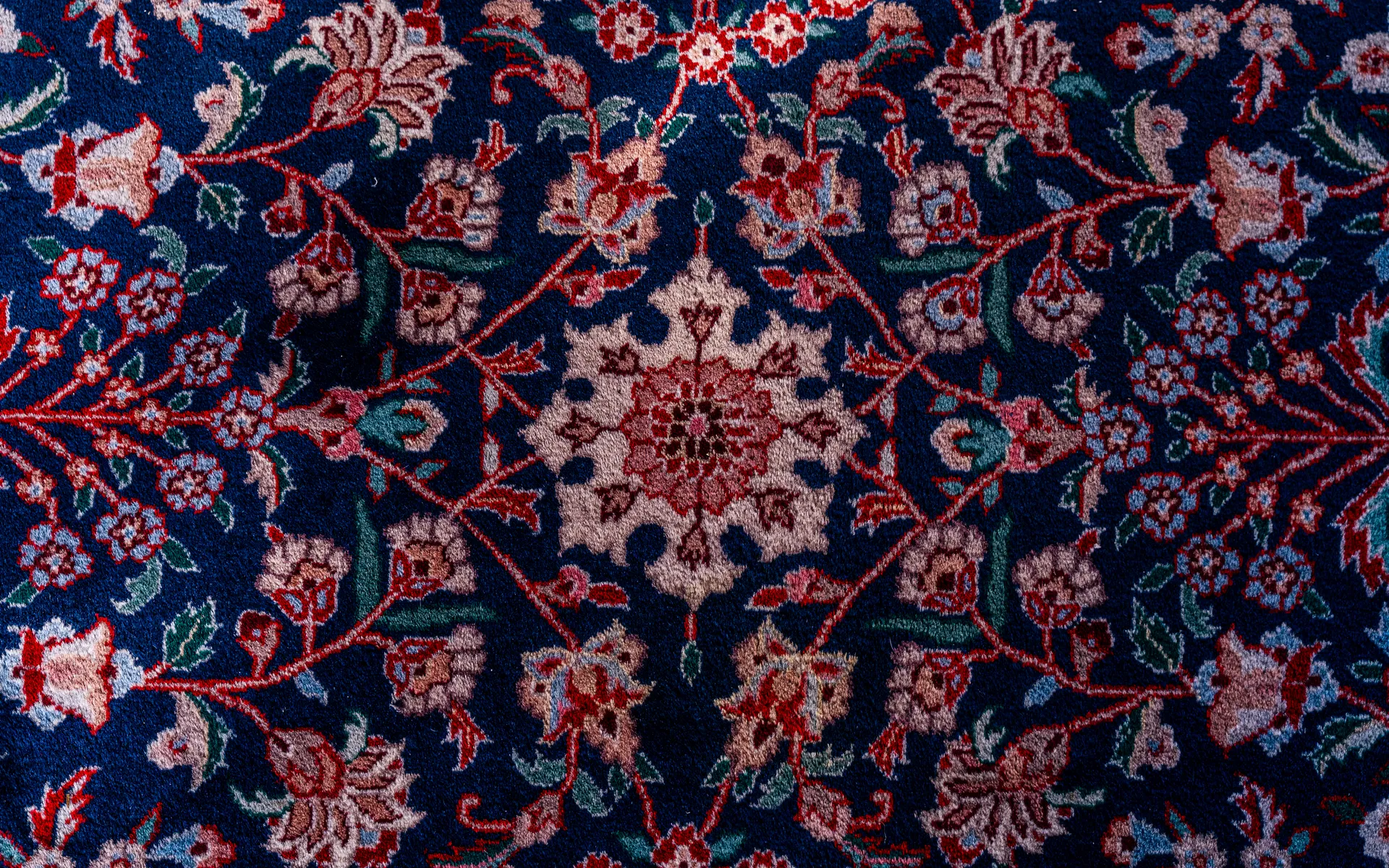
The quickest way to learn how to get sand out of a rug is to follow where the sand goes. Foot traffic works it down to the base of the pile and into the foundation, the grid of threads that holds a rug together, and that is where it does its damage. This guide covers why grit (any hard particle, from beach sand to fine dust) wears rugs out, the steps that remove it, how the method changes by rug type, and a test that shows when a vacuum is not enough.
Why Is Sand So Bad for Rugs?
Sand is bad for rugs because every footstep grinds hard grains against the base of the pile (the yarn surface you walk on), and that friction slowly cuts the fibers.
Much of Florida's beach sand is quartz, which sits at 7 on the 10-step Mohs hardness scale, hard enough to scratch window glass. On the southeast coast, Florida State Parks notes, beach sand is often more coral and mollusk shell fragments than quartz. Either way, grains trapped in the pile grind against the fibers with every step, like fine sandpaper.
A New York State carpet-care training manual says sand and grit wear and cut fibers as people walk on them. Southwest Looms, a maker of handmade rugs, describes the same process in wool: grit works down to the base of the pile, where abrasion damages the wool and causes loss of pile.
Sand damage tends to show first as a dull, flattened path where people walk most. Some of that dullness is soil that cleaning can lift; some is worn-away fiber that no cleaning brings back.
How to Get Sand Out of a Rug, Step by Step
Work in this order: dry, knock out what you can, vacuum the back, clear the floor beneath, then vacuum the pile.
- Let any wet sand dry completely. Household vacuums are built for dry soil, so never run one over a wet rug. Damp sand clumps in the pile; dry sand lets go.
- Knock out loose sand outdoors if the rug is small and sturdy. Give it a few firm shakes, or drape it over a railing, back facing you, and brush the back with a soft brush or give it flat-handed pats. The next section covers which rugs should skip this.
- Vacuum the back first. Flip the rug face down and vacuum the back in slow, overlapping passes. Consumer Reports advises vacuuming the back occasionally because gritty dirt abrades a rug's backing, and working from this side can help dislodge grit near the base of the pile. Use suction only, or raise the brush roll to its highest setting.
- Vacuum the floor underneath. Grit loosened from the back drops onto the floor; clear it before the rug goes back down, or the next footsteps grind it right back in.
- Vacuum the pile. Turn the rug face up and run your hand across it; the smooth direction is the way the pile lies. Make slow, overlapping passes in that direction, and go over sandy areas two or more times.
- Check your work with the paper test below. If grit still falls out, repeat steps 2 to 5 once, then stop: more vacuuming will not reach what is left.
Keep the beater bar off the pile. Southwest Looms warns that beater brushes remove a small amount of pile with each use. If your upright cannot switch its brush roll off, use the hose and a handheld attachment on wool, silk and shag.
The Paper Test for Hidden Grit
This check comes from the same maker's care guide. Lay a sheet of white paper on the rug near a corner, fold the corner over it so the back faces up, and strike the back firmly several times with your hand. If an appreciable amount of grit lands on the paper, the rug should be professionally dusted and cleaned. Skip the test on antique or fragile rugs and let a professional judge them.
Is It Safe to Shake or Beat a Rug?
Shaking or gentle beating is safe for small, sturdy rugs in good condition, and risky for anything old, fragile, silk or heavy.
Bath mats, doormats, small shags and small flatweaves can take a few firm shakes outdoors; grip the body of the rug, not the fringe, and shake rather than snap it like a towel. A sturdy wool rug over a railing tolerates brushing or moderate, flat pats on the back, but keep strikes off the face and skip hard-edged tools.
Skip shaking and beating for:
- Antique or worn rugs, and any rug that feels stiff, crunchy or brittle when you fold back a corner
- Silk and viscose rugs
- Rugs too heavy to lift comfortably, because wrestling them strains the edges
- Tufted rugs, whose yarn is held by a glued latex backing rather than knots
Vacuum these instead, and leave what vacuuming misses to a professional.
Does the Method Change for Flatweave, Shag or Hand-Knotted Rugs?
Yes: how a rug is made decides where sand hides and how much handling it can take.
A flatweave, such as a kilim, a dhurrie or most jute and sisal rugs, has no pile; the design is woven into a thin, often reversible textile. A hand-knotted rug has yarn tied around vertical warp threads, row by row, with horizontal wefts packed between the rows; warps and wefts together form the foundation. A tufted rug has yarn punched through a fabric backing and secured with latex.
| Rug type | Where sand hides | How to get it out | Avoid |
|---|---|---|---|
| Flatweave (kilim, dhurrie) | Between threads and on the floor beneath | Shake if small; vacuum both sides | Aggressive brush rolls |
| Jute, sisal, seagrass | Deep in the coarse weave | Vacuum both sides, brush roll off | Wet cleaning |
| Tufted | Base of the pile | Slow passes on the face; vacuum the floor beneath | Wet washing |
| Hand-knotted (Persian, Oriental, Turkish) | Base of the knots and the foundation | Back, then floor, then pile; suction only | Beater bars on the face |
| Shag and high pile | Deep in the long yarn | Shake outdoors if small; slow suction passes | Brush rolls |
| Silk or viscose | Base of the fine pile | Gentle suction only | Shaking, beating, brush rolls |
Natural fibers need extra caution with water; see our guide to cleaning jute, sisal and seagrass rugs. For settings and attachments by rug type, see how to vacuum an area rug.
What About Wet Sand, Pool Grit and Fine Dust?
Treat anything wet as a drying job first, and remember that a vacuum removes dry particles only.
Grit from pool decks and patios often arrives on wet feet, so it lands as a damp smear rather than loose grains. Blot standing water, let the spot dry completely, then vacuum. If the rug got thoroughly wet, dry it all the way through, back and pad included, before it goes back down; a handmade-rug maker warns that a rug laid down damp can develop mold, mildew and dry rot. Our guide on how to dry a wet rug walks through it.
Vacuuming lifts grains, not residue. Salt and sunscreen that ride in with beach sand stay behind, so a spot that still looks darker or feels different after a thorough vacuum needs cleaning, not more passes.
Fine dust from shoes and open doors settles where sand does but is much harder to see. The Carpet and Rug Institute notes that soil is far less visible in carpet than on a smooth floor, and rug pile hides it the same way, so a rug can look clean while carrying a real load. That is why the paper test is worth doing even on rugs that never see the beach.
How Can You Keep Sand Out of Your Rugs?
Stop sand at the door, with mats inside and out, a shoes-off habit and a quick rinse before anyone crosses the rug.
- Use entry mats outside and inside exterior doors, and keep them clean; the Carpet and Rug Institute recommends vacuuming mats regularly and shaking or brushing out embedded soil weekly.
- Make shoes-off the beach-season rule, with a bench and basket by the door.
- Rinse feet and gear outside. An outdoor shower or a water bucket by the pool door catches sand early; shake towels, bags and chairs before they come in.
- Vacuum entry and pool-door rugs more often. The institute's guideline is at least once a week for all floor coverings, more for high-traffic areas such as entryways.
- Rotate rugs 180 degrees now and then so the sandy path from the door does not wear down one end.
- Use a rug pad. It keeps the rug from shifting, and Southwest Looms advises a pad designed so dirt settles to the floor instead of damaging the back of the rug.
If you live near the water in Key Biscayne or Miami Beach, plan for sand weekly, not seasonally. Salt air, humidity and sun add their own wear; our guide to rug care in Miami covers it.
When Does Sand Need Professional Dusting?
Call a professional when the paper test keeps turning up grit after a careful vacuum, or when the rug is too old, fine or large to handle at home.
Dusting is the dry step that works embedded soil out of a rug's foundation before it is washed. The Southwest Looms guide is blunt that a vacuum cannot do this job; to remove grit from rug foundations at that depth, you need dusting, not another pass.
Other signs it is time:
- The rug is antique, silk or an heirloom, or feels stiff or brittle
- It is too large or heavy to flip safely
- Sand came in with water, and the rug still looks spotted or smells musty after drying
At Bakers Rug Service, every rug is washed by hand, individually, and never machine cleaned. Each starts with an expert inspection and a deep dusting to remove embedded dry soil, followed by a hand wash with gentle pH-neutral solutions and controlled air drying. You can see each step of our hand-wash process.
Not sure whether your rug can be handled at home? Tell us about it or call (305) 232-3368 for a free estimate, with complimentary pickup and delivery in Miami-Dade, Broward and Palm Beach counties.
Frequently Asked Questions
How do I get sand out of rug fringe?
Keep the vacuum's brush roll away from it. A handmade-rug maker warns that beater brushes can destroy fringe, and the Carpet and Rug Institute advises care with fringe and edging. Comb sand out gently with your fingers or a soft brush, working from the rug outward, or follow Consumer Reports and cover a handheld nozzle with an old nylon stocking so the strands are not sucked in.
Can I shampoo or steam clean sand out of a rug?
Not until the dry grit is out. The Carpet and Rug Institute says any do-it-yourself cleaning should start with vacuuming to remove as much dry soil as possible. For handmade rugs, one maker warns that washing without a thorough dusting first leaves dirt residue that hardens in the foundation, and that steam can make dyes bleed and shrink wool. Leave wet cleaning of wool, silk and plant-fiber rugs to a professional.
Will baking soda or carpet powder help lift sand?
No. Powders add more fine particles to a rug that is already full of them, and every grain has to be vacuumed back out. A handmade-rug maker's care guide warns that powder dry-cleaning only polishes the surface and leaves a large quantity of gritty residue behind. Skip powders on handmade rugs entirely; on other rugs, a thorough vacuum does more for sand.
Is a robot vacuum enough for a sandy rug?
It helps, but it is not enough. A robot vacuum can pick up surface sand between deeper cleanings, before it gets walked in, but it cannot flip the rug to vacuum the back, so deep grit stays put. Watch it on handmade rugs, too: one rug maker reports a couple of cases of a robot vacuum pulling on a rug and causing shedding. Keep it away from fringe.
Still Finding Sand After a Careful Vacuum?
Tell us about your rug through the contact form or at (305) 232-3368. We will help you decide whether a careful vacuum is enough or it needs a deep dusting and hand wash. Estimates are free.
Sources
- Carpet & Rug Care Guide (The Carpet and Rug Institute)
- Carpet Care and Maintenance Training Manual (New York State Office of General Services)
- Care and Cleaning: Tips to Maintain Your Handmade Carpet (Southwest Looms)
- How to Care for Antique and Area Rugs (Consumer Reports)
- Beach at Delnor-Wiggins (Florida State Parks, Florida Department of Environmental Protection)
- Hardness: Mohs Scale (The University of Auckland, Geology: Rocks and Minerals)