How to Clean a Silk Rug: Real Silk vs. Viscose Care Guide
Real silk and viscose look alike but react to water very differently. Learn how to tell them apart, what to do in the first minutes after a spill, and when to call a pro.
By Bakers Rug Service · Hand-washed rug care in Miami since 1940
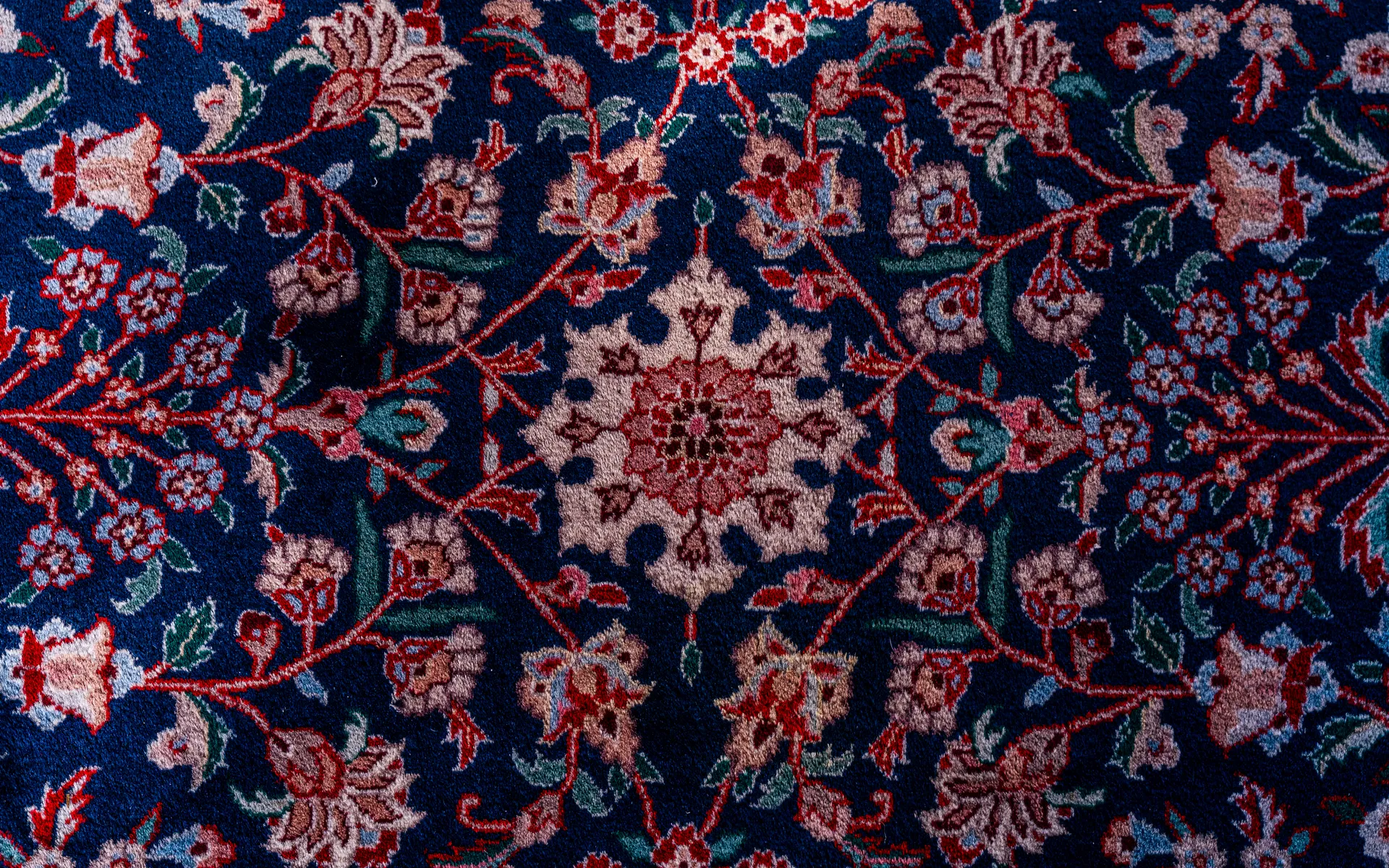
Learning how to clean a silk rug starts with a question many owners skip: is it really silk? Rugs sold as art silk or bamboo silk are typically viscose, a manufactured fiber also called rayon, and viscose reacts to water very differently from real silk. The wrong method can leave rings, pale spots or distortion that cannot always be corrected. Here is how to tell the two fibers apart, what to do in the first minutes after a spill, and where home care should stop.
Silk vs. Viscose: What Is the Difference?
Silk is a natural protein fiber spun by silkworms, while viscose is manufactured by chemically dissolving wood or bamboo pulp and spinning the cellulose into new fibers.
Ohio State University Extension notes that rayon, the first manufactured fiber, was originally called artificial silk, which is where the shorthand art silk comes from. Viscose is the most common form of rayon, and the Federal Trade Commission (FTC) accepts either name on a label. Bamboo silk belongs to the same family: the FTC warns that soft bamboo fabric has likely been turned into rayon or viscose.
| Trait | Real silk | Viscose (rayon) |
|---|---|---|
| What it is | Natural protein fiber from silkworm cocoons | Manufactured fiber spun from dissolved wood or bamboo pulp |
| What water does | Dyes may run or fade; rubbing while wet can chafe the surface | Fiber weakens and swells; it can shrink, distort, bleed or leave rings |
| Deep cleaning | Professional, with dye testing and controlled drying | Professional; rug makers discourage home cleaning |
How Can You Tell If a Rug Is Silk or Viscose?
Start with the label, because sheen and softness alone can fool even careful shoppers.
Read the Label
Under FTC textile labeling rules, rugs sold in the United States generally must name each fiber by its generic name, listed from the largest share of the rug's weight to the smallest. If the label lists only viscose or rayon, the rug contains no silk, whatever the product name suggests. An art silk rug, for example, must still show its actual fiber, usually rayon or viscose. If the label is gone, move on to the clues below.
Decode the Product Name
Treat terms like art silk, bamboo silk, faux silk and silk-like as descriptions of the look, not the fiber. Art silk and bamboo silk are typically viscose, while faux silk can be viscose or another manufactured fiber, so the label has the final say.
Treat Sheen and Feel as Clues, Not Proof
Both fibers are lustrous and smooth, and Ohio State University Extension points out that rayon can look like silk without behaving like it or sharing its care needs. Wear patterns offer a better hint. Ohio State notes that rayon is not a resilient fiber, so pile (the yarn surface you walk on) that looks crushed in walkways or under furniture is one more reason to suspect viscose.
Skip the Burn Test
Online guides often suggest burning a few fibers to identify them, but that means pulling yarn from your rug and putting a flame to it. A rug professional can examine the fiber safely; until then, treat the rug as viscose and keep water off it.
What Happens When Silk or Viscose Gets Wet?
Water threatens each fiber differently: viscose loses strength and shape, while silk risks running dyes and chafed, pale patches.
Viscose: Weak When Wet
Wet strength is how much of its strength a fiber keeps when wet, and Ohio State University Extension calls low wet strength the distinguishing property of regular viscose rayon: wet fibers become unstable and may stretch or shrink. Rug maker Nourison warns that moisture weakens viscose and that rubbing it while wet can break the fiber. Loloi, another rug maker, adds that viscose is highly absorbent, swells and loses its shape when wet, and can shrink, distort or bleed color if it is saturated or steam cleaned.
Discoloration is the other risk. Water can leave dark rings and lighter patches on rayon that may be permanent, and Nourison notes that viscose stains and yellows easily when the wrong cleaning products are used.
Silk: Colors and Surface at Risk
Silk fails in other ways. The Drycleaning & Laundry Institute (DLI) warns that home washing can make silk colors fade or run, and that rubbing silk while it is wet can cause chafing or light spots that cannot be corrected. DLI also names household detergents, products containing chlorine and alcohol among the everyday products that can discolor or damage silk.
How to Clean a Silk Rug After a Spill
Act within minutes, blot instead of rubbing, and add no liquid of your own, whether the rug is silk or viscose.
- Lift solids first. Scrape them up gently with a dull knife or the edge of a spoon so you don't press them deeper.
- Blot with something dry and white. Press plain white paper towels or a clean white terry cloth straight down, then move to a dry section and repeat until nothing more transfers.
- Never rub or scrub. Wet viscose is at its weakest, and wet silk chafes.
- Add no liquid. On viscose, water itself does the damage; on silk, dyes can run and wet fibers chafe. Dry blotting is the whole home treatment for both, so skip water and spot cleaners. If a care label ever calls for a specific product, test it first on an inconspicuous spot.
- Dry it quickly, without heat. Keep air moving over the spot with a fan, and keep hair dryers, heaters and direct sun away. Ohio State notes that dye and finish migration on rayon gets worse the longer an area stays damp.
- Groom the pile once it is dry. Brush gently in the direction of the pile with a soft brush. Nourison notes that blotted viscose can look flatter and more reflective until it is brushed.
- If a ring appears, stop. Washing it out at home means adding more water to a fiber that is already reacting to it.
Wine or coffee? Our red wine and coffee stain guide has general advice for those spills, but on silk or viscose, stop after the blotting steps above and call a professional.
How Do You Care for a Silk or Viscose Rug Day to Day?
Gentle, dry maintenance and careful placement protect these rugs between professional cleanings.
- Vacuum without the beater bar. Use suction only, or switch off the rotating brush roll. Nourison does not recommend beater-bar vacuums on viscose and cautions that they can pull or snag yarns.
- Never pull a loose yarn. If a tuft or knot rises above the pile, leave it for a professional; Nourison warns against pulling yarn knots out of the surface.
- Choose a dry, low-traffic spot for viscose. Loloi advises against high-traffic or high-moisture areas, so keep viscose out of entryways, kitchens, bathrooms and the path in from the patio. In waterfront neighborhoods from Coconut Grove to Key Biscayne, wet feet and humid air come with the territory.
- Keep cosmetics off silk. Perfume, hair spray and hand sanitizer are also on DLI's list, so a silk rug in a dressing area deserves extra caution.
- Limit strong light. DLI counts light among the things silk is sensitive to, so keep a silk rug out of direct sun where you can. Our guide to preventing rug fading has more ideas.
- Use a rug pad. Nourison recommends a pad under every rug to help extend its life, and Bakers Rug Service offers custom-cut non-slip rug pads, with moth proofing available.
Can You Wash a Silk Rug at Home?
Not safely: a real silk rug needs professional cleaning, not a bathtub, the driveway or a rented steam cleaner, and makers of viscose rugs discourage any home cleaning beyond blotting.
The problem is control. At home you cannot reliably test every dye or dry a heavy rug fast and evenly, and those are the steps that protect silk and viscose. Rented steam cleaners and shampooers deliver exactly what Loloi warns against: saturation and steam.
For viscose rug cleaning, the manufacturers are blunt. Nourison tells owners to always use a professional cleaning service and discourages consumer self-cleaning, and Loloi recommends professional cleaning when in doubt. The same rule covers bamboo silk rug cleaning, because bamboo silk is typically viscose.
A careful professional identifies the fiber, checks colorfastness (whether the dyes hold when wet) and matches the method to what the rug can tolerate; DLI notes that professional cleaners test silk for colorfastness. At Bakers Rug Service, silk rugs are washed by hand, one at a time, and never machine cleaned. Each goes through an expert inspection for dye stability, stains and structural damage, deep dusting to remove embedded dry soil, a hand wash with gentle pH-neutral solutions, and controlled air drying in a climate-controlled environment to prevent mold and shrinkage. Fringe repair, rebinding edges and fixing holes are done when requested; see our rug washing and repair services.
When to Call a Professional
Call a professional whenever a silk or viscose rug needs more than dry blotting, gentle vacuuming and a soft brush.
Signs it is time:
- A ring, halo or yellowish tint appears after a spill dries
- Colors have bled, or you are not sure the dyes are stable
- Wine, coffee, pet urine or anything sticky reached the pile
- The pile looks crushed, matted or distorted, or the rug has rippled or shrunk
- You cannot confirm whether the fiber is silk or viscose
- The rug is an heirloom or a hand-knotted piece you would not want to replace
If you are weighing whether a professional cleaning makes sense for a newer or decorative rug, our guide to whether professional rug cleaning is worth it can help you decide.
Bakers Rug Service offers free estimates and complimentary pickup and delivery in Miami-Dade, Broward and Palm Beach counties. Our shop is at 8723 SW 132 St in Miami's Kendall area. To ask about your rug or arrange a pickup, call (305) 232-3368 or reach us through the contact form.
Frequently Asked Questions
Can I use vinegar, club soda or dish soap on a silk or viscose rug?
Skip all three. Club soda is still mostly water, and on viscose any added liquid risks rings, swelling or distortion. Vinegar is an acid, and Ohio State University Extension notes that some dyes used on rayon are especially sensitive to acids and alkalis. Dish soap is a problem for silk: the Drycleaning & Laundry Institute lists dish liquids among products that can discolor or damage it. Blot dry, then let a professional decide the next step.
My rug's label lists wool and viscose. Which care rules apply?
Follow the viscose rules. A rug can be mostly wool and still contain enough viscose to react badly to water, and because you cannot wet one fiber without the other, the more delicate fiber sets the limits. Blot spills dry, add no liquid, and leave deep cleaning to a professional who can test both the fibers and the dyes before choosing a method.
If bamboo is a natural plant, is a bamboo silk rug washable?
No. The FTC says that once bamboo is chemically processed into soft fabric, there's no trace of the original plant left and the fiber no longer has the same qualities as bamboo. What you most likely own is viscose, with viscose's low wet strength, so it gets the same care as any viscose rug: blot spills dry, keep water off it and leave washing to a professional.
Can a water ring on a viscose rug be fixed?
Sometimes, but not always. In rayon textiles, Ohio State University Extension explains, moisture-sensitive dyes and finishes migrate to the edge of a wet spot and dry there as a ring, and the darker shading or lighter areas left behind may be permanent. Results depend on the dye, the finish and how long the area stayed wet. A professional can assess the mark and tell you what is realistic before any treatment begins.
Not Sure Your Rug Can Handle Home Care?
Tell us about your silk or viscose rug and what happened to it. We'll help you decide whether it's safe to handle at home or needs a professional, starting with a free estimate.
Sources
- Threading Your Way Through the Labeling Requirements Under the Textile and Wool Acts (Federal Trade Commission)
- Bamboo Fabrics (Federal Trade Commission Consumer Advice)
- Rayon—The Multi-Faceted Fiber, Fact Sheet HYG-5538-02 (Ohio State University Extension, archived copy)
- Caring for Silk: Tips from Professional Cleaners (Drycleaning & Laundry Institute)
- Rug Care Expert Advice from Nourison
- How Should I Clean and Care for a Rayon or Viscose Rug? (Loloi Client Knowledge Base)