Rug Repair: Fringe, Edges, Holes and When Repair Beats Replacement
Fringe, edges, holes, moth damage and faded color: what each rug repair involves, how to choose between repair and replacement, and how to photograph damage for an estimate.
By Bakers Rug Service · Hand-washed rug care in Miami since 1940
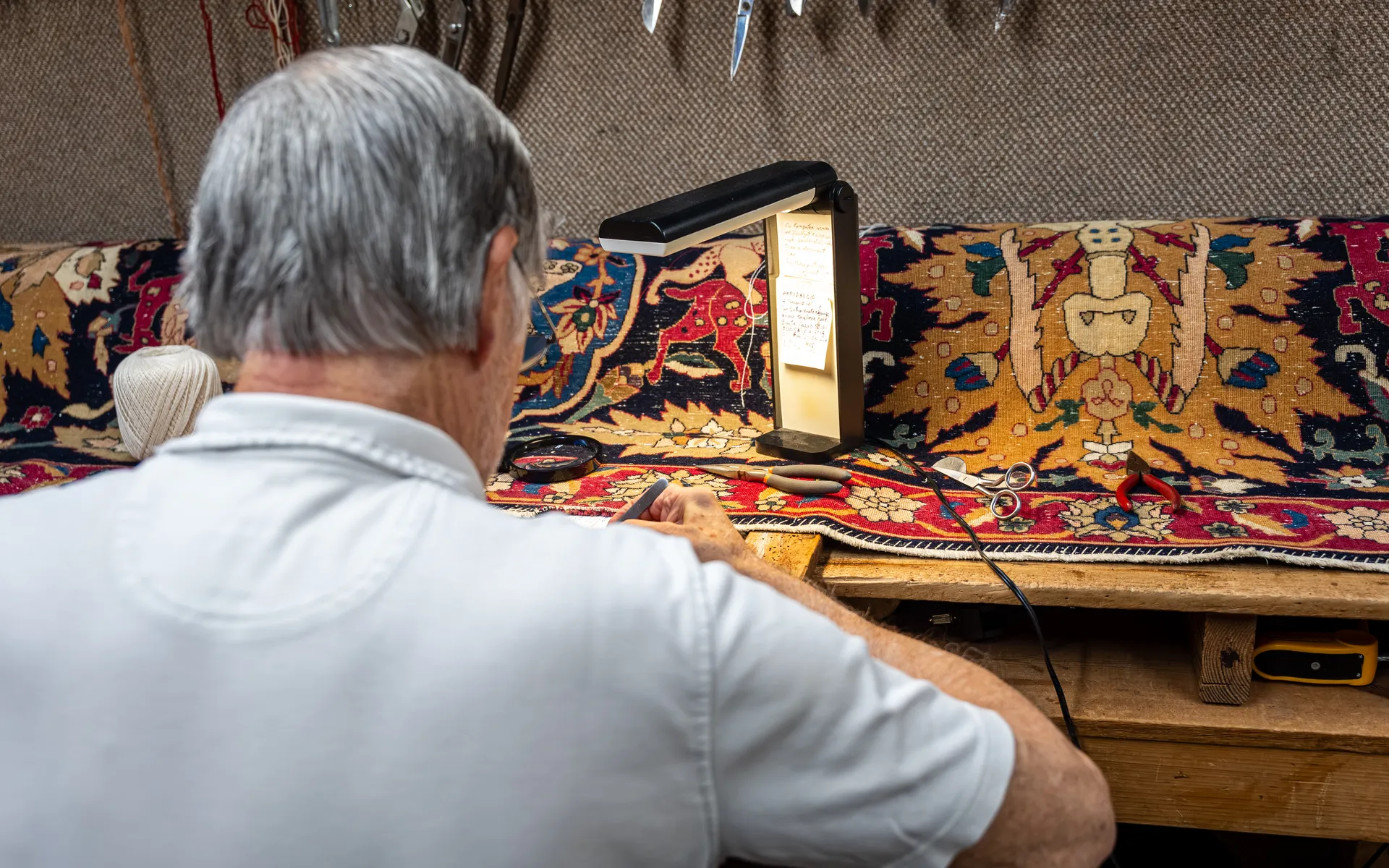
A loose fringe knot, a side edge coming unwound or a small hole rarely means a rug is finished. Rug repair secures that damage so it stops spreading, and restoration goes further by rebuilding what is missing. This guide covers each type of repair, how to decide between repairing and replacing, what the process looks like and how to photograph the damage before you ask for an estimate.
What Is Rug Repair, and How Is It Different From Restoration?
Rug repair stabilizes structural damage, while rug restoration also rebuilds lost material so the area looks as close to the original as possible.
Many jobs combine the two:
- Stabilization: securing what remains so the damage stops growing, without rebuilding it.
- Restoration: rebuilding missing foundation, pile or color so the repaired area blends in.
It helps to know how a hand-knotted rug is built. The warps run from end to end, and the wefts pass from side to side over and under them to form the foundation. The pile is made of knots wrapped around the warps and cut, so the cut ends form the surface. On many hand-knotted rugs, the fringe is simply the warp ends, and the long sides are finished by overcasting a cord or wrapping several cords into a selvedge.
That structure explains why small damage matters. When end knots or side cords give way, the rows of knots beside them lose their anchor. The Institute of Conservation (Icon), the UK professional body for conservators, notes that carpets in use are susceptible to wear and that edges and fringes are particularly vulnerable.
What Are the Signs a Rug Needs Repair?
A rug needs repair when its structure, not just its surface, has started to fail.
Look at it flat on the floor, then turn it over, because the back often shows damage more clearly.
- Fringe knots that are loose, missing or noticeably shorter at one end
- The woven band where the fringe meets the pile wearing through or coming apart
- Side cords that are frayed, loose or missing, often with the edge curling
- Holes, splits or spots where the foundation shows through the pile
- Pile worn down to the knots in patches, especially under furniture and along the edges
- Silken tubes, small cases, bristly shed skins or gritty debris, which point to insects
- Colors that have bled into neighboring areas or faded unevenly
Pest specialists at the University of California recommend inspecting beneath heavy furniture and along carpet edges, because carpet beetle larvae feed in dark, undisturbed spots. To check for fading, Icon suggests comparing the colors on the front with those on the back.
Types of Rug Repair and Restoration
Most rug repair falls into five categories: fringe repair, edge rebinding, reweaving holes, moth damage repair and color restoration.
| Problem | Repair | What it does |
|---|---|---|
| Loose or worn fringe | Fringe repair | Secures the warp ends so end knots stop slipping, or rebuilds lost fringe |
| Frayed or unwound sides | Edge rebinding | Rewraps or replaces the side cords so the outer knots stay locked in |
| Holes and splits | Reweaving | Rebuilds warps and wefts, then knots new pile to match |
| Moth or beetle damage | Moth damage repair | Treats the damaged area once the insects are gone, then reweaves it |
| Fading or dye bleed | Color restoration | Brings discolored areas closer to the surrounding colors where dyes and fiber allow |
Fringe Repair
Fringe repair ranges from stitching the ends so no more knots slip loose to adding new warp that rebuilds fringe worn away by foot traffic and vacuuming. Securing the ends early is the smaller job; once the woven end band fails, the repair grows.
Edge Rebinding
Edge rebinding, also called overcasting or selvedge repair, rewraps the side cords with new yarn matched to the original color. Caught early, it is one of the simplest repairs. Left alone, a loose edge lets the damage spread inward.
Rug Reweaving
Rug reweaving rebuilds a hole from the foundation up. New warps and wefts are set into the gap, then pile is knotted in and trimmed to the height of the surrounding rug. The closer the match in fiber, color and knot density, the better the area blends in.
Moth Hole Repair
Moth hole repair uses the same reweaving method, but the insects have to be dealt with first; reweaving over live larvae only gives them fresh wool. Carpet beetles are more likely than clothes moths to damage one large area, and they leave bristly shed skins instead of silk webbing. To tell the two apart and stop them, see our guide to preventing moths and carpet beetles in rugs.
Color Restoration
Color restoration treats faded, worn or bled areas so they read closer to the rest of the rug. It has limits. Washing removes soil but cannot put back dye that light has faded, and the American Institute for Conservation warns that water exposure can cause dye bleed and transfer that may often be irreversible. A careful inspection should tell you what is realistic before any work begins.
Should You Repair or Replace a Rug?
Repair usually makes sense when a rug is hand-knotted or hand-woven, has real or sentimental value and the damage is contained; replacement makes more sense when an inexpensive rug is worn across most of its surface.
Four questions settle most cases.
- What is it worth? An antique, rare or signed piece, or a rug you plan to keep for decades, justifies more work. If you are unsure, an appraisal can tell you before you commit, and our guide to antique rug care and appraisal explains what affects value.
- What does it mean to you? A family rug cannot be bought again, so even modest repairs that keep it usable are often worth doing.
- How much of it is damaged? Worn fringe, one loose edge or a few holes is a contained job. Thin pile across the whole field, or holes scattered everywhere, is a much bigger one.
- Is the foundation sound? If the warps and wefts are brittle and crack when the rug is handled gently, repair options narrow, and stabilization may be the realistic goal.
| Leans toward repair | Leans toward replacement |
|---|---|
| Hand-knotted wool or silk | Machine-made rug with low replacement value |
| Damage limited to fringe, edges or a few spots | Wear across most of the field |
| Strong, flexible foundation | Brittle foundation that breaks when handled |
| Antique, appraised or family piece | No particular attachment |
Plan for upkeep, too. The American Institute for Conservation points out that heirloom textiles kept in everyday use face more risk of damage and need more care and repair over time.
What to Expect From Professional Rug Repair
Professional rug repair starts with an inspection and an estimate, so you know what the rug needs before you commit.
At Bakers Rug Service, estimates are free, and every rug goes through the same five steps.
- Expert inspection. Dye stability, stains and structural damage are checked, front and back.
- Deep dusting. This step targets embedded dry soil, dust mites and allergens.
- Hand wash. Each rug is washed by hand, individually, with gentle pH-neutral solutions, never machine cleaned.
- Repair and detail. Fringe repair, edge rebinding and hole repair are done when requested.
- Controlled air drying. Rugs dry in a climate-controlled environment to prevent mold and shrinkage.
Most rugs are cleaned and returned within 5 to 7 business days. Complex repairs typically take 2 to 4 weeks, so ask which timeline applies when you request your estimate. Pickup and delivery are complimentary across Miami-Dade, Broward and Palm Beach counties, with work done at the shop at 8723 SW 132 St in the Kendall area.
How to Photograph and Prepare a Damaged Rug
Clear photos record the damage before anything changes, so take them in daylight, front and back, with something for scale.
- One full shot of the front and one of the back, from above if you can
- Close-ups of each damaged area with a tape measure laid beside it
- The same areas from the back, where the foundation shows
- Both ends, so fringe loss on each side is visible
- Any label on the back, plus length and width measured without the fringe
Add what you know: the rug's age or origin, where it has been lying, whether pets or insects were involved and when you first noticed the damage.
Before pickup, a few steps keep the damage from getting worse:
- Do not trim loose threads or fringe. Cutting removes material a repairer may need.
- Do not use glue or tape. The Institute of Conservation advises against adhesives and adhesive tape, even for temporary repairs.
- Keep the vacuum off the fringe and go gently around damaged areas.
- Keep a rug with live insects apart from other wool rugs and textiles, and mention the insects when you book.
- Roll it rather than fold it, and lift it instead of dragging it. The Canadian Conservation Institute warns against pulling a rug by one edge.
When to Call a Professional for Rug Repair
Call a professional as soon as you see structural damage, insect activity or color change on a rug you want to keep, because these problems tend to grow with use.
Reweaving, moth damage and color work in particular belong with a professional, because mistakes with dyes and foundation are hard to undo.
Bakers Rug Service handles fringe repair, edge rebinding, hole reweaving, moth damage repair and color restoration as part of its rug cleaning and repair service. Rugs from Kendall, South Miami and the rest of Miami-Dade, Broward and Palm Beach counties qualify for complimentary pickup and delivery.
Ready to find out what your rug needs? Describe the damage and request your free repair estimate, and we will arrange a complimentary pickup.
Frequently Asked Questions
Can my rug be cleaned and repaired in the same visit?
Yes. At Bakers Rug Service, repair and detail is one of the five steps in the same process as the hand wash, so the fringe, edge and hole repairs you request are done before controlled air drying and delivery. A rug that only needs cleaning usually comes back sooner than one with complex repairs, so ask which timeline applies to yours.
Will a rewoven area be invisible?
Not always, and a careful repairer will say so up front. How well a reweave blends depends on matching the fiber, dye color and knot density of the original, and on how worn the surrounding pile is. New yarn can look slightly different from aged yarn in some light. Ask what result to expect, and whether stabilizing the area would serve the rug better than a full rebuild.
Should I cut off a worn fringe instead of repairing it?
On a hand-knotted rug, usually not. The fringe is the end of the warp threads that hold every row of knots, so cutting it off removes part of the foundation and leaves the end knots with less to grip. If you prefer a shorter or cleaner look, ask a repairer to secure the ends first. On machine-made rugs with sewn-on fringe, removing or replacing that strip is a different job.
Do I need an appraisal before deciding on a major repair?
Not for routine fringe or edge work, but an appraisal helps when a restoration would be extensive or the rug may be antique or valuable. Knowing what the rug is worth puts a repair estimate in context and helps you decide how far to take the work. Bakers Rug Service offers appraisal services, which you can ask about when you request your repair estimate.
Schedule a Pickup for Your Rug Repair
Describe the damage through the contact form for a free estimate. Pickup and delivery are complimentary across Miami-Dade, Broward and Palm Beach counties, and complex repairs typically take 2 to 4 weeks.
Sources
- Basic care: Carpets and rugs (Canadian Conservation Institute)
- Carpets and Rugs: Caring for Your Treasures (Institute of Conservation, Icon)
- How Do I Care for Textiles (American Institute for Conservation)
- Clothes Moths: Pest Notes (UC Statewide IPM Program, University of California)
- Carpet Beetles: Pest Notes (UC Statewide IPM Program, University of California)
- Carpets iii. Knotted-pile carpets: Techniques and structures (Encyclopaedia Iranica)