Rug Cleaning for Allergies: Living With Pets in South Florida
Manage pet hair, dander, dust mites and pollen in your rugs in South Florida with HEPA vacuuming, humidity control, a simple routine and easier-care rug choices.
By Bakers Rug Service · Hand-washed rug care in Miami since 1940
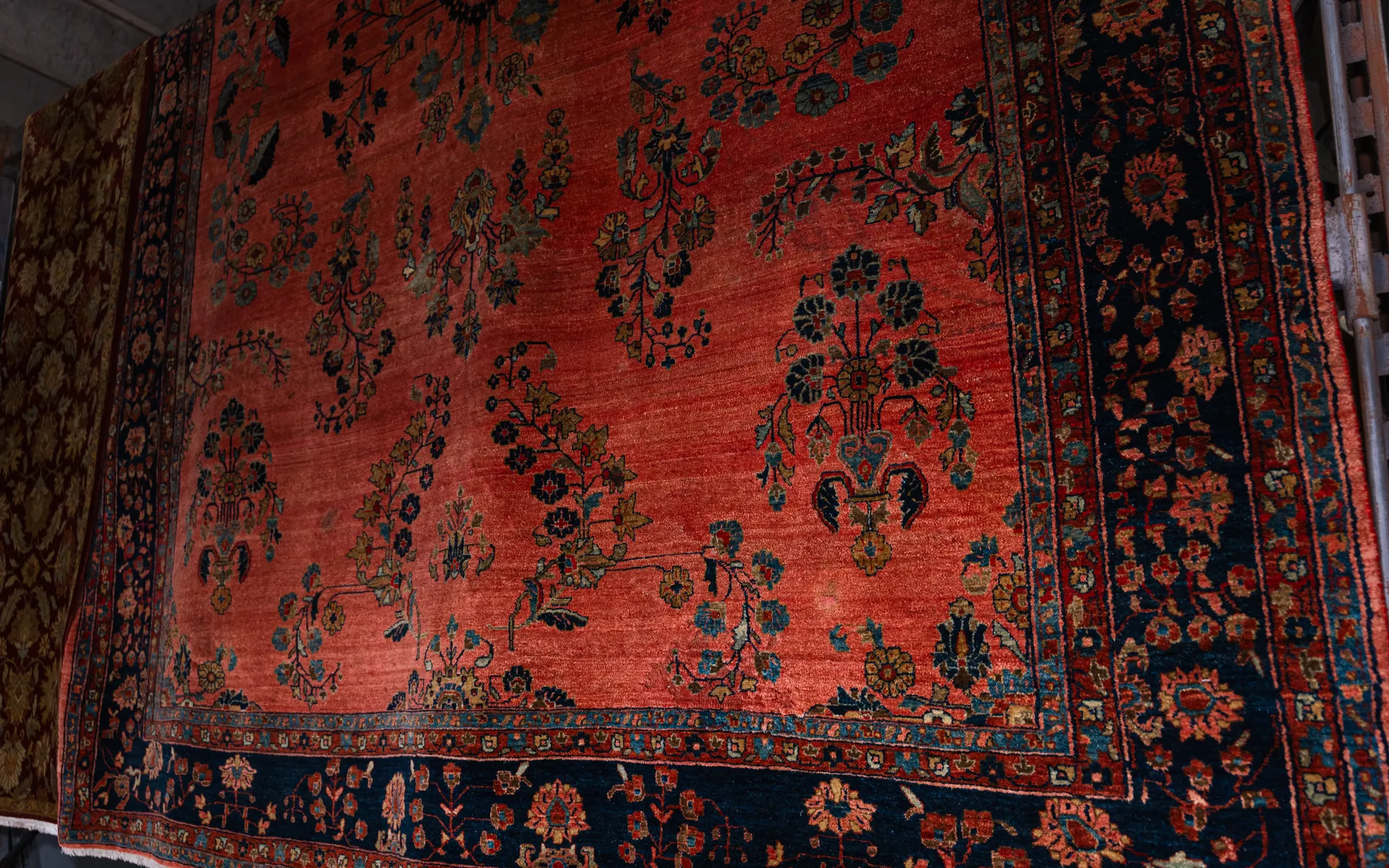
Rug cleaning for allergies in a pet household is less about one big wash and more about steady control: removing what rugs collect, cutting off what feeds it, and knowing when a rug needs more than a vacuum. In South Florida, year-round humidity and pets that go in and out all day make that routine matter more. Here is how to handle pet hair, dander, dust mites, pollen and damp, and how to choose easier-care rugs.
This is household cleaning guidance. If you or someone at home has allergy or asthma symptoms, talk with a physician or an allergist about what is triggering them.
What Do Rugs Collect in a Home With Pets and Allergies?
Rugs hold four common indoor allergen sources: pet dander, dust mites, pollen and, when a rug stays damp, mold.
| Source | What it is | How it reaches the rug |
|---|---|---|
| Pet dander | Dead skin flakes; allergy proteins are also in saliva and urine | Shed by dogs and cats, carried in on clothing |
| Pet hair | Not an allergen itself, but it carries dander, dust mites, mold and pollen | Shed straight into the pile |
| Dust mites | Microscopic creatures that feed on skin shed by people and pets | Live in bedding, carpets and fabric furniture |
| Pollen | Plant grains carried on the wind | Tracked in on shoes, clothes and paws |
| Mold | Fungi that grow on damp materials | Wet spots, damp pads, rugs that never fully dry |
The Asthma and Allergy Foundation of America (AAFA) is clear on a point many pet owners miss: people with pet allergies react to proteins in dander, saliva and urine, not to the hair. Pet hair in rug pile still matters, because it collects dander and other allergens and holds them there. AAFA also notes that pet allergens stick to carpets and fabrics, get stirred back into the air by dusting and vacuuming, and turn up even in places where pets have never lived.
So the goal is to take allergens out of the rug, not just move them around the room.
Why Dust Mites in Rugs Thrive in South Florida Humidity
Dust mites depend on humidity, and South Florida rarely gives them a break without help from air conditioning.
UF/IFAS, the University of Florida's Institute of Food and Agricultural Sciences, notes that dust mites stop reproducing and die when humidity is 50 percent or lower, and that Florida humidity almost never drops below 50 percent during the summer months. Because mites eat skin shed by people and pets, a home with a dog or cat gives them more to feed on.
National Jewish Health, a Denver hospital, breaks indoor relative humidity down like this:
| Indoor relative humidity | Dust mite outlook |
|---|---|
| 30 to 40 percent | Ideal for control |
| 40 to 50 percent | Marginal |
| 50 to 60 percent | Mites can be bothersome |
| Above 60 percent | Worse still |
What that means for the rugs in a Miami-area home:
- Measure it. Keep an inexpensive hygrometer, a simple humidity gauge, in the room with your main rug.
- Let the air conditioner do its job. UF/IFAS suggests using a dehumidifier or adjusting the air-conditioning system to keep home humidity at 50 percent or less.
- Catch damp early. The EPA advises drying wet materials within 24 to 48 hours to prevent mold and warns that mold can hide on the underside of carpets and pads. Wet paws after a storm or a swim deserve a towel before they reach the rug.
How to Vacuum Rugs for Allergies With HEPA Filtration
Vacuum rugs at least weekly with a HEPA-filter vacuum, and have someone without allergies do it when possible.
HEPA stands for high-efficiency particulate air. Under the definition the EPA cites, a HEPA filter can theoretically remove at least 99.97 percent of airborne particles 0.3 microns in size, the hardest size to catch; larger and smaller particles are trapped even more efficiently. AAFA recommends vacuuming carpets and fabric furniture weekly with a HEPA-filter vacuum, and UF/IFAS goes further for dust mites, suggesting carpets be vacuumed every few days.
An allergy-minded routine:
- Choose who vacuums. National Jewish Health advises that a person with a dust mite allergy should not vacuum or be in the room while it is being vacuumed.
- Slow down in pet zones. Slow, overlapping passes give the vacuum time to pull hair and dander out of the pile.
- Match the vacuum to the rug. Delicate, fringed and hand-knotted rugs need gentler settings; our step-by-step guide to vacuuming an area rug covers beater bars, fringe and the back of the rug.
- Empty with care. Change the bag or empty the bin as the manufacturer directs, ideally outdoors and by someone without allergies.
Pet Friendly Rug Care: Stopping Hair and Dander at the Source
The less dander and hair that reaches the rug, the less you have to remove, so pet friendly rug care starts with the pet and the room.
AAFA's allergy guidance includes several habits that directly affect your rugs:
- Wipe your pet down with pet-friendly wipes or a towel after time outside, to remove pollen and urine.
- Ask about bathing. AAFA's pollen guidance suggests bathing furry pets weekly if appropriate; ask your veterinarian what schedule suits your pet's skin and coat.
- Keep pets out of bedrooms, along with their beds and cages, and keep bedroom doors closed.
- Run a HEPA air cleaner at least four hours a day; it catches what floats, while vacuuming handles what settles.
Two rug-specific habits help too:
- Give pets a washable spot of their own. A washable pet bed or throw in a favorite napping place catches hair that would otherwise work its way into an heirloom rug.
- Treat accidents quickly and completely. Urine carries allergy proteins, so a lingering accident is an allergen problem as well as an odor problem. Our guide on how to remove pet urine from a rug covers fresh and old spots.
How to Keep Pollen Off Your Rugs in South Florida
South Florida's pollen season is long, so the habits that keep pollen off your rugs need to run all year.
AAFA notes that grass pollen can be found year-round in warmer parts of the country, including the South, and that southern trees may release pollen as early as December or January and peak several times a year. Its indoor advice applies directly to rugs:
- Take shoes off at the door, and keep a washable mat at each entry for paws.
- Keep windows closed during peak pollen times, and rely on central air conditioning or HEPA air cleaning.
Rug Cleaning for Allergies: A Routine for Pet Homes
A routine works when each task has its own rhythm: frequent HEPA vacuuming, regular humidity checks and scheduled washes.
| Task | How often | Guideline from |
|---|---|---|
| Vacuum carpets and rugs for dust mite control | Every few days | UF/IFAS |
| HEPA vacuum rugs and fabric furniture | At least weekly | AAFA |
| Wash machine-washable throw rugs | Weekly for pet allergies; monthly for pollen | AAFA |
| Hold indoor humidity at or below 50 percent | Ongoing; check the hygrometer often in summer | UF/IFAS, National Jewish Health |
Hot water is for washable throw rugs only. AAFA suggests washing throw rugs in hot water, which suits cotton or synthetic throws whose care labels allow it. Never use hot water on wool or silk, and never put a hand-knotted rug in a washing machine.
For professional washes, our guide to how often to clean area rugs sets intervals by room, traffic and pets.
Choosing Easier-Care Rugs When Someone Has Allergies
Choose rugs you can clean thoroughly and often: low pile or flat weaves in busy areas, washable pieces in bedrooms and pet zones, and pads that won't trap moisture.
National Jewish Health recommends removing carpeting from the bedroom of a person with a dust mite allergy and using area rugs that can be washed instead. AAFA's pet allergy guidance favors hard flooring and, where carpet stays, a low pile. Area rugs have one clear advantage over installed carpet here: they can leave the house for a full wash and a thorough drying.
- Low pile or flat weave in pet zones and hallways.
- Washable throws in bedrooms, with finer rugs kept in rooms where pets don't nap.
- Patterned, mid-tone designs hide hair between cleanings.
- A breathable, well-fitted pad. Because mold can grow under carpets and pads, choose one suited to your floor and rug; see how to choose a rug pad.
- Read the care label first. A cotton or synthetic throw labeled machine-washable can join the wash cycle, while wool, silk and hand-knotted rugs need gentler handling and periodic professional washing.
No rug is allergen-proof. AAFA makes the same point about animals: "a truly non-allergic dog or cat does not exist."
When Should You Call a Professional Rug Cleaner?
Call a professional when a rug still sheds dust or smells after regular vacuuming, when pet accidents have reached the backing or pad, or when the rug is wool, silk, antique or hand-knotted.
Signs it is time:
- The rug smells musty after a humid stretch.
- A pet accident soaked through to the foundation or pad.
- Hair is packed into a thick pile that vacuuming no longer lifts.
- The rug is valuable or delicate and you don't want to experiment.
At Bakers Rug Service, every rug is washed by hand, individually, and never machine cleaned. Our rug cleaning service starts with an expert inspection and a deep dusting that targets embedded dry soil, dust mites and allergens, followed by a hand wash with gentle pH-neutral solutions and controlled air drying in a climate-controlled environment to prevent mold and shrinkage. Pet stain and odor treatment and custom-cut non-slip rug pads are available too.
Our shop is at 8723 SW 132 St in Kendall, and we offer complimentary pickup and delivery across Miami-Dade, Broward and Palm Beach counties, including Doral. Estimates are free. For symptoms, talk with a physician; for the rug itself, we can help.
Not sure whether your rug needs a wash or just a better routine? Send us a few details through our contact form and we will help you decide.
Frequently Asked Questions
Does a professional rug wash get rid of dust mites for good?
No cleaning is permanent. A thorough wash is meant to clear out the dust, skin flakes and debris that build up deep in a rug, but mites can return wherever humidity stays high and food keeps arriving. Holding indoor humidity at or below 50 percent, vacuuming on schedule and keeping pets off bedroom rugs are what protect the result between washes.
Can an air purifier replace vacuuming my rugs?
No. A HEPA air cleaner captures particles while they are floating, which is why AAFA suggests running one at least four hours a day in homes with pet allergies. Dander and dust that have already settled into a rug stay there until they are vacuumed or washed out. The two work as a pair: the vacuum lifts what has settled, and the air cleaner catches what vacuuming stirs up.
How long do pet allergens stay in rugs after a pet is gone?
Longer than most people expect. AAFA notes that pet dander can remain in a home for up to six months after the pet has been removed, and that cat allergens are especially sticky. If you move into a home where pets lived, or a pet leaves your household, plan a thorough cleaning of floors, rugs and fabric furniture, and consider a full wash for any rug before an allergic family member uses it.
Should I get rid of my rugs if someone in the family has allergies?
Not necessarily. How strict to be depends on the person and what they react to, so ask the treating allergist. If rugs stay, focus on pieces you can wash or have washed, and start with the bedroom of the person with symptoms, because AAFA points out that people spend roughly a third to half of their time in bedrooms.
Not Sure What Your Rug Needs?
Tell us the rug's fiber, size and whether pets use it. We will help you decide if home care is enough or it needs a hand wash, and estimates are free.
Sources
- Pet Allergy: Are You Allergic to Dogs or Cats? - Asthma and Allergy Foundation of America
- Pollen Allergy - Asthma and Allergy Foundation of America
- Dust Mite - National Jewish Health
- Strange Bedfellows: Warm Weather Means Dust Mite Population Explosion - UF/IFAS
- A Brief Guide to Mold, Moisture and Your Home - US EPA
- What is a HEPA filter? - US EPA