Rug Cleaning for Condos: Miami High-Rise Rules, Elevators, and Care
Elevator reservations, vendor paperwork, marble floors, AC moisture and balcony storms: a practical guide to rug cleaning and care in Miami condos and high-rises.
By Bakers Rug Service · Hand-washed rug care in Miami since 1940
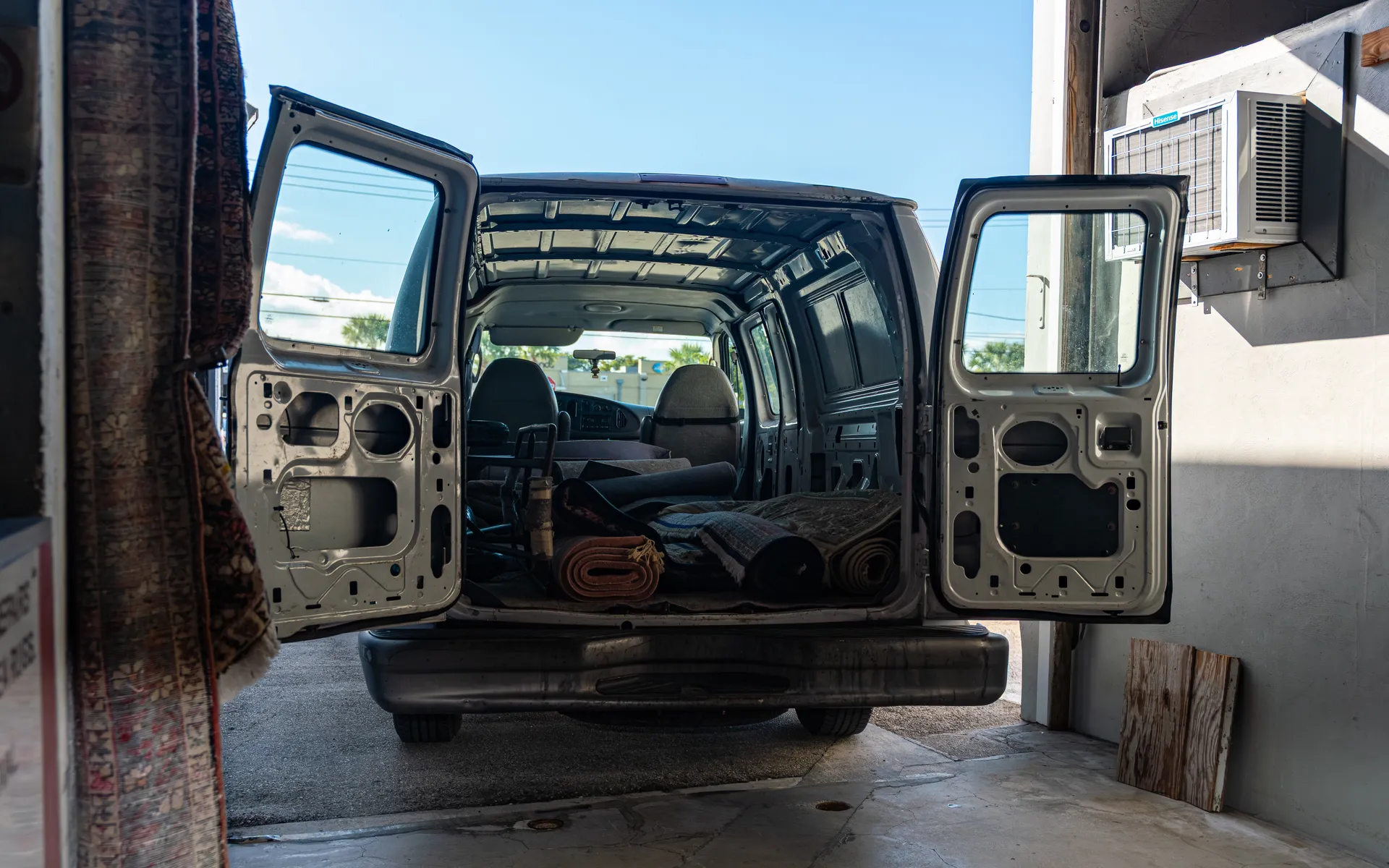
Rug cleaning for condos is the same careful work as in a house, but the building sets the terms: who can use the elevator, when a vendor can arrive, and where a rolled rug is allowed to wait. Add tile or marble floors, air conditioning that runs most of the year and a sun-washed balcony, and high-rise rug care in Miami needs its own checklist. This guide covers what to ask management, how to get a rug ready for pickup, and how to protect rugs and floors between cleanings.
How Does Rug Cleaning for Condos Work in a High-Rise?
It works like any pickup service, with one extra step at the start: clearing access with your building.
- Check the building's rules. Ask management or the front desk how vendors move large items in and out (the questions are below).
- Book the pickup. Share those requirements, the rug's size and fiber, and any problem spots when you schedule.
- Reserve the elevator if required. Match the reservation to the pickup window, and ask for an estimated return date so you can book the delivery slot too.
- Prepare the rug. Clear the furniture, note stains and damage, and keep the rug flat and dry until pickup.
- Plan the return. Have the floor clean and dry and the pad ready before the rug comes home.
Bakers Rug Service offers complimentary pickup and delivery across Miami-Dade, Broward and Palm Beach counties, so you do not have to haul a rolled rug across town yourself. Every rug is washed by hand at the Kendall shop; see how the five-step process works, our page on Brickell rug cleaning, and what to expect from rug pickup and delivery.
What Should You Ask Building Management Before a Rug Pickup?
Ask a handful of practical questions a few days ahead, because the answers decide when and how the crew can reach your unit.
| Question for management | Why it matters |
|---|---|
| Do vendors need a service elevator reservation? | Some buildings move large items only by service elevator, during set hours. |
| Which entrance, loading area or garage level should the crew use? | A long rolled rug may not suit the lobby route, and the van needs a place to stop and load. |
| What vendor paperwork is required, and how far ahead? | Some associations want specific documents or a work order on file before granting access. |
| Do the elevator walls need protective pads? | Pads may have to be hung before anything large rides in the cab. |
| Can the front desk release and receive the rug for you? | Staff may need written permission on file to hand items to a vendor. |
| Can a rolled rug wait in the hallway? | Some buildings do not allow items left in corridors, even briefly. |
Share the answers when you book so paperwork and timing are settled before pickup day. Rules vary from building to building, which is why condo rug cleaning in Miami starts with a call to the front desk.
If You Will Be Out of Town
If you split the year between Miami and somewhere else, a pickup can still happen without you. UF/IFAS Extension's seasonal-home checklist suggests leaving your contact information with your homeowners association; for a rug, also leave written permission for staff to release and receive it.
How Do You Prepare a Rug for Pickup in a Condo?
Clear the space, record the rug's condition and keep it unfolded.
- Move furniture the day before. Lift heavy pieces rather than dragging them; Singapore's Building and Construction Authority (BCA) warns that sliding heavy furniture across natural stone can scratch it.
- Photograph the front and back. Note stains, odors, worn fringe, loose edges and any moth signs, and say what caused a stain if you know. That helps the inspection step, which checks dye stability, stains and structural damage before any water touches the rug.
- Do not fold it to fit the elevator. Folds can leave creases and strain the foundation, so leave it flat or roll it.
- Skip the balcony shake. Shaking or beating a rug over the railing drops grit and dust onto the terraces below.
- Speak up about moisture. If an AC leak or a spill has dampened the rug, say so when you book. Do not seal it in plastic while it waits: UF/IFAS cautions that wrapping items tightly in plastic may increase the likelihood of mildew. Lift it so air reaches both sides, and follow how to dry a wet rug in the meantime.
- Decide about the pad. A flattened, crumbling or sticky pad is a cue to order a custom-cut replacement for when the rug returns.
- Flag size and fiber. Mention an oversized or silk rug when you book, so its handling can be planned.
Rugs Over Tile and Marble: How Do You Protect Both?
Choose a pad that suits your floor, keep grit from building up underneath, and let mopped floors dry before the rug goes back down.
The Natural Stone Institute, the stone industry trade association, advises making sure the underside of any rug on stone is slip resistant. BCA adds that rubber- or jute-backed rugs may themselves stain stone, so the pad decision depends on your floor as much as your rug. Ask your stone installer what is safe for your stone and its sealer, then use how to choose a rug pad to match the pad to the floor.
The NSI also recommends dust mopping stone floors often, because sand, dirt and grit are abrasive. Under a rug, that grit is pressed into the floor with every step, so lift the corners and dust-mop beneath the rug whenever you clean the floor.
After wet mopping, BCA recommends buffing stone dry, because water left to dry on its own can leave etch spots. Give the floor time to dry fully before the pad and rug go back.
Do Rugs Help With Condo Noise?
If your association has flooring sound rules, ask management whether an area rug and pad count toward them before you rely on one. Check, too, that doors still clear the rug and pad once they are in place.
How Does Air Conditioning Affect Rugs in a Condo?
Air conditioning protects rugs by pulling moisture out of the air, so in a condo the real risks are a clogged drain line, condensation on glass and an AC switched off while you are away.
- Drain lines: the EPA recommends keeping AC drip pans clean and drain lines flowing. If a line clogs, the water can reach the floor, and a nearby rug soaks it up first.
- Leaks: the EPA says that if wet materials are dried within 24 to 48 hours of a leak or spill, in most cases mold will not grow.
- Condensation: the EPA calls condensation a sign of high humidity, so keep rugs and pads clear of wet window edges and glass doors.
For textiles, the Canadian Conservation Institute (CCI) names damp, meaning relative humidity above 70 percent, as the one condition to always avoid. At 70 percent, mold takes three months or more to develop; at 90 percent, it can appear in a few days. For the indoor humidity targets that keep rugs well clear of that line, see our guide to rug care in Miami humidity, salt air and sun.
Leaving for the Season
Do not turn the AC off and walk away. UF/IFAS Extension's guide to closing a seasonal home says there is no need to keep the unit cool while you are gone, but periodic air conditioner operation removes moisture. It recommends a professional check-up three weeks before you leave and a clean condensate line. The same guide notes that food particles and body oils on furnishings absorb water from the air and attract mildew and pests, which makes the weeks before you leave a sensible time to have rugs washed.
Balcony and Terrace Rugs: What Can Go Outside?
Keep wool, silk and heirloom rugs indoors; outside, use a rug made for outdoor use and bring it in before a storm.
The CCI describes light damage to textiles as cumulative and irreversible, caused by visible light as well as ultraviolet. A terrace in full sun is hard on natural dyes, and floor-to-ceiling glass does the same more slowly indoors. UV-absorbing window film can reduce ultraviolet, the CCI notes, but visible light does damage too, so rotating rugs and drawing shades still matter.
Storms bring a legal duty as well. Under Miami-Dade Code Section 8B-18, once a tropical storm warning, hurricane watch or hurricane warning is issued, loose objects in outdoor locations must be stored inside or fastened to a fixed structure. A balcony rug can become windborne, so bring it in early with the furniture, and dry it before it touches hardwood, stone or an indoor rug.
Oceanfront units in Miami Beach also face salt air, which the Miami climate guide linked above covers.
When Should a Condo Owner Call a Professional?
Call for help when a rug is valuable, damaged, wet, smelly or simply too big to clean in a condo.
A high-rise unit has no driveway or yard for washing and drying a large rug. Call a professional for:
- Wool, silk, antique or hand-knotted rugs, where a misstep with water or cleaning products can set stains or make dyes bleed.
- Pet urine or odors that return on humid days.
- A rug soaked by an AC leak that you cannot dry within 24 to 48 hours.
- Worn fringe, loose edges, holes or moth damage.
- Rugs too large to roll and carry through the building yourself.
At the shop, each rug is inspected, deep dusted to remove embedded dry soil, washed by hand with gentle pH-neutral solutions, repaired if you request it, and air dried in a climate-controlled environment to prevent mold and shrinkage. Estimates are free, and pickup and delivery are complimentary, including for buildings in Downtown Miami.
Have your building's rules in hand? Request a free estimate and mention your elevator and paperwork requirements so the plan fits your building from the start.
Frequently Asked Questions
Can I wash an area rug on my condo balcony?
It is rarely a good idea. Rinse water and detergent can run onto the balconies below, a soaked rug is heavy and awkward to carry back inside, and drying it in strong sun invites fading. Read your association rules before trying anything, and never put wool, silk or antique rugs out there. A small rug made for outdoor use is the exception if your building allows a light rinse.
Do I need to be home for a condo rug pickup?
Not necessarily. If your building allows it, the front desk or concierge can release the rug with your written authorization and accept it the same way on delivery. Confirm in advance who will sign, where the rug will wait and whether management wants the authorization on its own form. Describe stains, odors and damage in your request, so those notes reach the inspection even if you are not there.
Is it safe to vacuum a rug that sits on marble?
Yes, vacuum the rug itself, but take care where the machine rolls off onto the stone. The Natural Stone Institute warns that worn metal or plastic attachments and worn wheels can scratch some stones, so check the vacuum before you start. Work from the center of the rug toward its edges, and use a clean, dry dust mop on the exposed stone instead.
What should I do before a cleaned rug is delivered back to my condo?
Reserve the elevator for the delivery window if your building requires it, and make sure the floor is swept, mopped and completely dry so no grit or damp ends up trapped underneath. Put the pad in place first. Decide where the furniture will sit so the rug can be laid once, rather than dragged into position across tile or stone.
Get a Clear Estimate Before Pickup Day
Tell us your rug's size and fiber, plus your building's elevator and paperwork rules, when you request a free estimate, so pickup can be arranged around them.
Sources
- A Brief Guide to Mold, Moisture and Your Home (U.S. EPA)
- Closing Your Seasonal Home, FCS3154 (UF/IFAS Extension)
- Care and Cleaning of Natural Stone (Natural Stone Institute)
- Textiles and the Environment, CCI Notes 13/1 (Canadian Conservation Institute)
- Natural Stone Finishes, Section 8.0 Maintenance (Building and Construction Authority, Singapore)
- Hurricane Preparedness for Building Purposes, Miami-Dade Code Sec. 8B-18 (City of Miami)