Hurricane Season and Your Rugs: Saving a Water Damaged Rug
How to protect rugs before a storm and judge a water damaged rug afterward: clean rain versus floodwater, the 24 to 48 hour mold window, and when to let a rug go.
By Bakers Rug Service · Hand-washed rug care in Miami since 1940
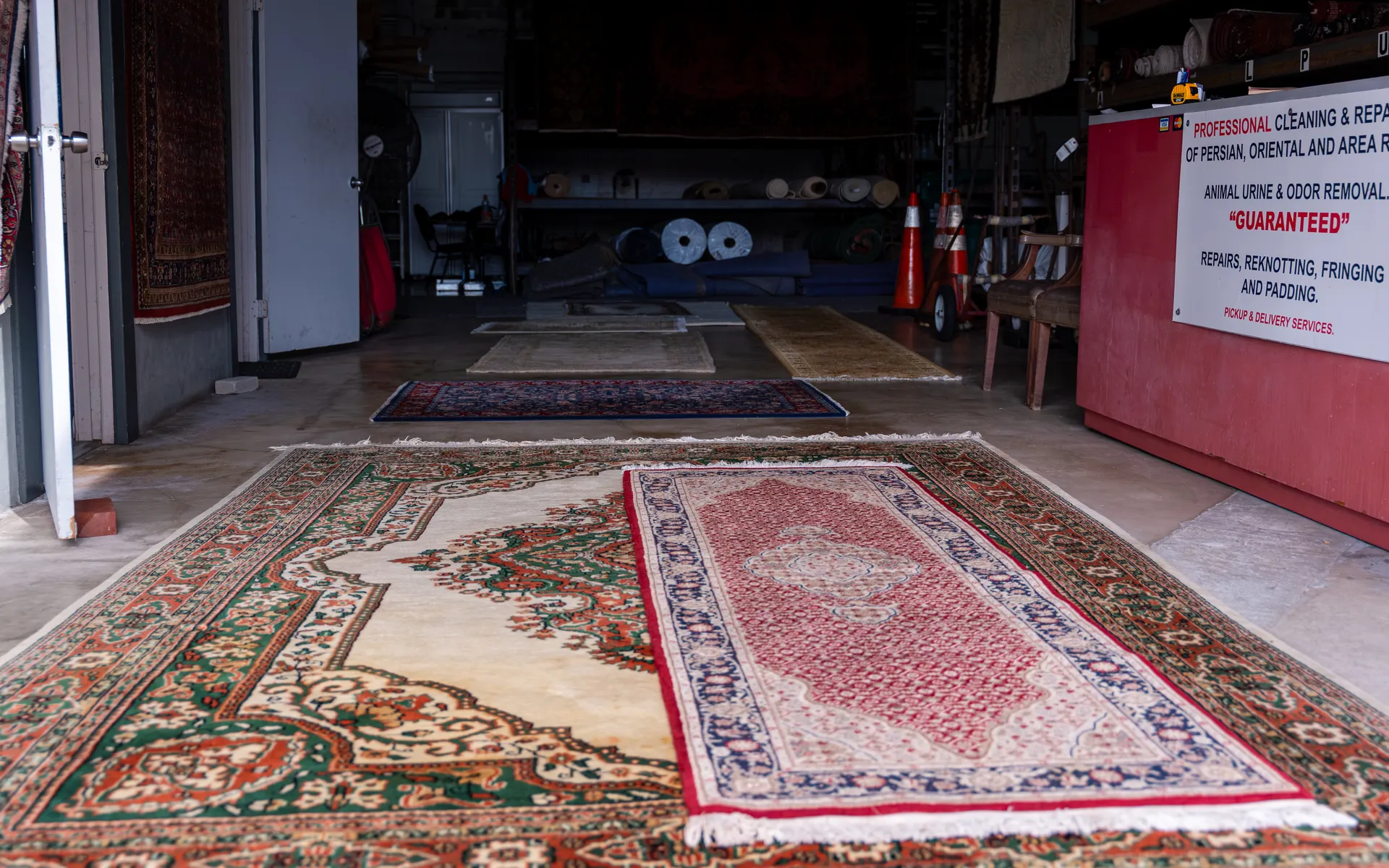
A water damaged rug after a hurricane is a race against two things: contamination and time. Whether it can be saved depends mostly on where the water came from and how fast the rug gets dry, and a little preparation before a storm can keep it out of the water entirely. This guide covers both halves for Miami-Dade homes: how to protect rugs while a storm is still offshore, and how to make the save-or-discard call once water is inside. Atlantic hurricane season runs from June 1 through November 30, so the plan is worth keeping on hand.
How Do You Protect Rugs Before a Hurricane?
Get rugs dry, rolled and off the floor, as high as you can, and well away from windows and exterior doors.
Floodwater rises from the ground up, while wind-driven rain is pushed sideways around windows, sliding doors and gaps in frames, so the safest spot is both high and interior. Good hurricane prep for rugs happens when a storm is forecast, before the shutters go up and the power goes out.
- Start with a dry rug. Vacuum it and make sure it is completely dry, because rolling a damp rug traps moisture inside the roll.
- Roll, don't fold. Folds stress the foundation and leave creases, and a firm, even roll is easier to carry and lift.
- Raise the roll. Move it upstairs, or set it on a bed, sturdy table or shelf rather than the floor of a garage or ground-floor room.
- Keep it away from glass. An interior room or closet without windows is safer, especially in condos and high-rises with no upstairs to retreat to.
- Roll the pad separately. Lift it too, because a soaked pad is nearly impossible to clean.
- Use plastic only as a short-term splash shield. Sheeting can keep spray off during the storm, but remove it as soon as the threat passes; a rug sealed in plastic holds in humidity.
- Photograph every rug. Front, back and labels; pre-storm pictures help document condition if you later file a claim.
What Kind of Water Soaked Your Rug?
The source of the water matters more than the amount, because clean rain and floodwater lead to very different decisions.
Restoration professionals sort water into three categories under the IICRC S500 standard, the water damage guideline from the cleaning and restoration trade's standards organization. Category 3 water is the one that matters most after a hurricane: the standard defines it as grossly contaminated water that can contain pathogenic, toxigenic or other harmful agents.
| Water source | How it is usually classed | What it means for the rug |
|---|---|---|
| Storm surge, seawater, or rising rivers and streams | Listed as Category 3 examples | Treat as contaminated |
| Sewage backup | Listed as a Category 3 example | Treat as contaminated |
| Rain through a roof leak or around a window | Not automatically Category 3 | Often salvageable if dried fast |
| Clean water left sitting for days | Can worsen with time and heat | More caution the longer it sat |
The rain row is a real distinction. In a 2026 position statement, the IICRC's S500 consensus body said that wind-driven rain and other weather-related water are not automatically Category 3; what counts is whether the water is grossly contaminated. Rain that blew in through a window and landed on a rug is a different case from street water that rose under the front door, which the EPA warns can carry bacteria, chemicals and microorganisms from sewage. The standard also notes that time and temperature can change a category, so clean water gets worse the longer it sits.
Safety First: Before You Touch a Wet Rug
No rug is worth a shock, a fall or an exposure, so make the room safe before you start lifting.
- Stay out of standing water near electricity. If water has reached outlets, cords or appliances, keep out of the room. Never step into standing water to reach the breaker panel; have an electrician shut off the power.
- Gear up. For flood cleanup, the EPA recommends an N-95 respirator, goggles without vent holes, gloves, long sleeves, long pants and boots or work shoes.
- Run generators outdoors only. If a generator powers your fans and dehumidifier, the EPA says never to run it inside the home, garage or shed, and to keep it at least 20 feet from buildings.
- Document before you discard. Photograph damaged rugs, backs and labels included, and call your insurer before anything leaves the house; the CDC also advises photographing discarded items for claims.
The 24 to 48 Hour Window for a Water Damaged Rug
You have roughly one to two days to get a wet rug clean and completely dry before mold becomes the working assumption.
CDC guidance says to throw away anything wet with floodwater that cannot be cleaned and dried completely within 24 to 48 hours, and the EPA notes that mold can grow on carpet and furniture that stay wet for more than 24 hours. Rugs are hard to dry inside that window, because dense pile, a cotton or wool foundation and any backing all hold water. After a flood, the EPA notes, drying out a home usually takes several days to weeks.
South Florida tightens the clock. The EPA points out that warm, humid outdoor air slows drying, and a hurricane often knocks out the air conditioning and dehumidifiers that would normally pull moisture from a room. Our guide to Miami humidity, salt air and sun explains why rugs here stay damp longer than you might expect.
In the first hours, focus on four things:
- Get the rug off the wet floor. The National Park Service notes that wet textiles become about half again as heavy and can be more fragile, so slide a sheet or tarp underneath and lift from below with help, never by a corner.
- Separate the pad. Set it aside; a soaked pad is rarely worth saving.
- Check the dyes. Following the NPS method, dab an inconspicuous spot, such as a corner of the back, with a cotton swab dampened in a little soapy water. If color transfers, don't fold the rug, because colors can move from one layer to the next; the NPS recommends that a professional handle bleeding dyes.
- Dry only what got clean water. For rain, follow the step-by-step plan in how to dry a wet rug. For floodwater or sewage, drying alone does not remove the contamination, so keep the rug out of living areas and go straight to the decision below.
Save or Discard? Deciding What to Do With a Flooded Rug
A flooded rug is worth saving when the water was clean and you caught it fast, or when the rug is valuable enough to justify a professional assessment; most other rugs soaked by floodwater are discarded.
Flood-recovery guidance from UF/IFAS Extension, adapted from University of Wisconsin Extension material, is plain. Installed carpet, most large area rugs and any rug with foam backing should be discarded if flooded with contaminated water. Except for valuable rugs, it says, professional cleaning after contaminated flooding generally is not worth the time and expense.
| Situation | Usual outcome |
|---|---|
| Small washable throw rug | Usually saved; machine wash per the care label |
| Hand-knotted wool rug, clean rain, caught within a day or two | Good candidate for professional cleaning |
| Large machine-made rug, floodwater | Usually discarded |
| Any rug with foam backing, floodwater | Discard |
| Valuable or heirloom rug, floodwater | Photograph it and get a professional assessment quickly |
| Soaked rug pad | Replace |
| Rug left wet past 48 hours, musty or visibly moldy | Assume mold; usually discarded unless valuable |
Why are contaminated rugs so often a loss? A rug is porous through its full depth, so floodwater carries silt, sewage and chemicals into the pile, the knots and the foundation, and on into the backing and pad, where surface cleaning cannot reach. That is why the guidance above leans so heavily toward discarding. For a hand-knotted wool or silk heirloom, though, get an expert inspection before you decide.
Wet Rug After a Flood: Mistakes to Avoid
Much of the damage after a flood comes from well-meant shortcuts, so skip these.
- Don't reach for bleach. Wool is easily damaged by bleach, which can also strip color, and the CDC warns never to mix bleach with ammonia because it can create toxic vapors.
- Keep heat away from wool and silk. No hot water, space heaters or hair dryers on natural-fiber rugs.
- Don't hang a soaked rug from one edge. Draped over a railing or fence, the weight of the water strains the foundation; support the rug flat instead.
- Don't scrub. Aggressive scrubbing can distort the pile and spread dye bleed; blot instead.
- Don't aim fans at visible mold. The EPA advises gently cleaning visible mold before running fans so they don't spread it.
- Don't put the rug back down too soon. The rug, the pad and the floor beneath all need to be dry, or the rug will pick moisture right back up. If a smell lingers later, see how to get a musty smell out of a rug.
When to Call a Professional
Call a professional when the rug is hand-knotted or sentimental, when floodwater or sewage was involved, when dyes are running, or when you cannot get it completely dry within 24 to 48 hours.
A rug specialist can inspect the dyes, foundation and fibers and tell you honestly whether the rug can be saved or whether replacing it makes more sense. If water reached walls, cabinets or the subfloor, the house needs its own drying plan; rug cleaning handles the rug, not the structure.
At Bakers Rug Service, every rug starts with an expert inspection, then is washed by hand, individually, with gentle pH-neutral solutions and air dried in a climate-controlled environment; nothing is machine cleaned. If a rug needs more than a wash, our rug repair services include fringe repair, rebinding edges and hole reweaving.
Pickup and delivery are complimentary across Miami-Dade, Broward and Palm Beach counties, from Homestead and Cutler Bay to Downtown Miami. If a storm has left a rug wet, tell us what happened and request a free estimate, and we will help you decide whether it can be handled at home or needs a professional wash.
Frequently Asked Questions
Does homeowners insurance cover a rug ruined by hurricane flooding?
Often it does not. FEMA notes that most homeowners policies do not cover flood damage. Flood insurance is a separate policy that can cover a building, its contents or both, and renters can buy it too. New policies usually carry a 30-day waiting period, so arrange coverage well before a storm is forecast, and read your own policy for what it includes.
Can a wool rug soaked by storm surge be saved?
Sometimes, but treat it as contaminated from the start, because the IICRC standard lists flooding from seawater among its examples of Category 3 water. A hand-knotted wool rug with real value deserves a fast professional look at its dyes and foundation. A machine-made or foam-backed rug soaked in surge water is usually not worth the attempt. Either way, photograph it before you decide.
Where should rugs go during a hurricane if I live in a condo?
With no upstairs, pick an interior room or walk-in closet away from windows and sliding doors, and set rolled rugs on a bed, dresser or shelf. Clear the area near balcony doors completely, because wind-driven rain can be forced in around them. Ask your building management about any storm procedures that affect your unit.
How can I tell if a rug that seemed to dry has mold?
Check the back of the rug, the pad and the floor underneath, not just the pile. A musty or earthy smell, spotty discoloration or a cool, damp feel at the foundation are warning signs. If the rug stayed wet past the 24 to 48 hour window, treat mold as likely even when you cannot see it, and have a professional inspect it.
Not Sure If Your Rug Can Be Saved?
Tell us what got wet, what kind of water it was and how long the rug has been damp. We'll help you decide whether it can be handled at home. Estimates are free.
Sources
- CDC, 8 Tips to Clean Mold
- U.S. EPA, Flood Cleanup to Protect Indoor Air and Your Health
- IICRC S500 Consensus Body, Category of Water Damage and Weather-related Events (Position Statement, March 2026)
- National Park Service, Preservation Matters: Disasters - Saving Wet Textiles After a Flood
- Cleaning Flood-Damaged Carpets and Rugs (UF/IFAS Extension, adapted from University of Wisconsin Extension)
- FEMA, Act Now to Protect Your Property with National Flood Insurance Program