Is Professional Rug Cleaning Worth It? What You Get, When It Pays Off
A cost-of-ownership look at professional rug cleaning: what grit, odor, moths and DIY mistakes really cost, and a verdict by rug type on when to clean and when to replace.
By Bakers Rug Service · Hand-washed rug care in Miami since 1940
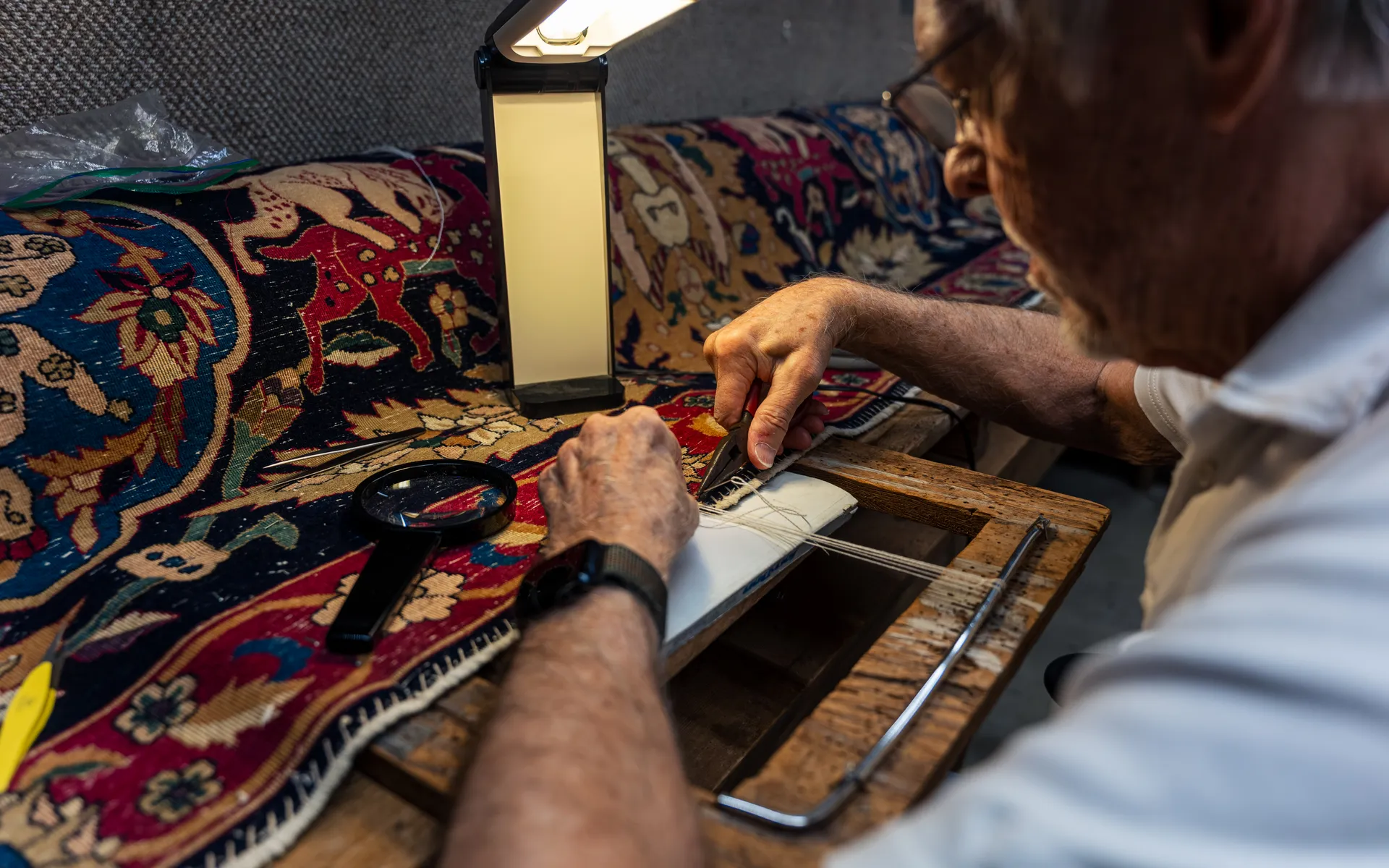
Is professional rug cleaning worth it? For wool, silk, hand-knotted and antique rugs, usually yes, because the payoff is a longer life, not just a brighter color. For a small washable mat or an inexpensive synthetic that is already worn, the honest answer is often no.
The way to decide is cost of ownership, and three questions frame it.
Is Professional Rug Cleaning Worth It for Your Rug? Three Questions
Professional cleaning pays off when a rug is hard to replace, still structurally sound and at real risk from soil or a home-cleaning mistake.
- Replacement: Could you buy the same rug again? A machine-made rug in a current style usually can be matched; a handmade or inherited rug usually cannot.
- Remaining life: Is the damage on the surface (soil, odor, stains) or in the structure (worn-through pile, a brittle foundation)? Cleaning solves the first kind, not the second.
- Risk: What happens if a home wash goes wrong? On a polyester or polypropylene rug, usually little. On wool or silk, bled dyes and shrinkage are permanent.
When a rug scores high on all three, cleaning is the less expensive path over the years. When it scores low on all three, replacing it is often sensible.
What Do You Get From Professional Rug Cleaning?
You get the steps a home cleaning skips: an inspection before any water touches the rug, removal of the grit packed into its base, a gentle wash and controlled drying.
Those steps are where the benefits of professional rug cleaning come from. At Bakers Rug Service, each rug is washed by hand, individually, never machine cleaned, in five steps:
| Step | What it protects the rug from |
|---|---|
| Expert inspection | Washing blind: dye stability, stains and structural damage are checked first |
| Deep dusting | Embedded dry soil, dust mites and allergens deep in the pile |
| Hand wash with gentle pH-neutral solutions | Harsh, highly alkaline products that can make dyes bleed |
| Repair and detail, when requested | Loose fringe, frayed edges and holes |
| Controlled air drying in a climate-controlled environment | Mold and shrinkage |
Pet stain and odor treatment, hole reweaving, moth damage repair and custom-cut rug pads are part of the same rug cleaning and repair services.
What Does It Cost to Wait? Grit, Odor and Moths
Waiting costs fiber: soil, residue and insects each take something out of a rug that no later wash can put back.
Grit Works Like Sandpaper
The Carpet and Rug Institute (CRI), the trade association for the carpet and rug industry, says dry soil, environmental pollutants and spills can damage rug fibers and reduce their useful life. The Canadian Conservation Institute compares dirt in a rug to sandpaper grinding away at its base.
The WoolSafe Organisation, which approves cleaning products for wool, separates soil into two kinds. Coarse, dry soil such as sand settles as far down as the roots of the tufts, while fine, sticky soil such as oil and soot causes most of the dull look on the surface. The more soil builds up, WoolSafe adds, the more difficult, and often expensive, it is to remove. In beach households on Key Biscayne, tracked-in sand is the coarse kind.
Odor and Residue Build Up Below the Surface
A rug's foundation, the woven base that holds the pile, keeps what a vacuum cannot reach: pet accidents, spilled drinks, body oils and fine dust. The CRI notes that oily soil left for a long time may be absorbed into the fibers and give them a yellow cast. A rug that still smells after vacuuming usually has a source below the surface.
Moths Prefer Undisturbed Wool
A University of Kentucky Cooperative Extension fact sheet explains that clothes moth and carpet beetle larvae feed on animal fibers such as wool and silk, but generally cannot digest synthetics or cotton. Rugs that get normal traffic or routine vacuuming are seldom damaged, while carpet edges along walls or under furniture are often attacked. Once larvae have eaten the pile, the remedy is moth damage repair, not a wash.
Humidity raises the stakes. The Canadian Conservation Institute warns that high humidity damages fibers and may cause colors to bleed. The EPA recommends indoor humidity below 60 percent, ideally 30 to 50 percent, and lists air conditioners and dehumidifiers as ways to get there, which matters in South Florida.
Is It Worth Cleaning a Rug Professionally? A Verdict by Rug Type
It depends mostly on fiber and construction: natural fibers and handmade rugs usually justify professional care, while washable and inexpensive synthetic rugs often do not.
| Rug type | Worth professional cleaning? | Why |
|---|---|---|
| Bath mats and small washable rugs | Rarely | The CRI says many can go in a washing machine; follow the label |
| Inexpensive synthetic (polypropylene, polyester, nylon) | Sometimes | Most cleaning methods work on synthetics, which resist insects |
| Machine-made or hand-tufted wool | Usually | Easily damaged by bleach, alkaline cleaners, heat and heavy agitation |
| Hand-knotted Persian, Oriental and Turkish rugs | Yes | Hard to replace, food for moth larvae, dyes need testing |
| Silk | Yes | Loses strength when wet; damaged by high heat and high pH |
| Jute, sisal and other plant fibers | Usually | The CRI recommends a professional for these fibers |
| Antique and heirloom rugs | Yes, professional only | Irreplaceable; condition and dyes need assessing first |
The synthetic row is where the answer flips most often. A small synthetic rug with ordinary soil is a reasonable home project if its label allows it; a large one with pet odor, or one that would be hard to match, can still be worth a professional wash.
For natural fibers the CRI is direct: it discourages do-it-yourself cleaning of area rugs containing natural fibers other than cotton.
Rug Cleaning vs Replacing: How Do You Decide?
Replace a rug when it is inexpensive, easy to match and worn through; clean it when it would be costly or impossible to replace and its structure is still sound.
Work through these in order:
- Is there mold? The EPA notes that porous materials such as carpet may have to be thrown away if they become moldy, because mold can be difficult or impossible to remove completely. Get it assessed first.
- How much pile is left? If traffic has worn the pile down to the foundation, cleaning brightens the rug but cannot put fiber back.
- Is the damage structural? Large holes, widespread moth loss or a brittle foundation are repair questions. Our rug repair and restoration guide explains what can be rebuilt.
- What would a comparable rug cost today? Compare like for like, at the same size and quality.
- What does it mean to you? An heirloom carries value that no replacement matches.
Then set a written estimate for cleaning and any repairs against that replacement figure. Our guide to what affects rug cleaning cost explains how those estimates are built.
Which DIY Mistakes Cost More Than a Professional Wash?
The expensive mistakes are the permanent ones: bled dyes, shrinkage, yellowed wool, sticky residue and a rug that stays damp long enough to grow mold.
WoolSafe says damage during wet cleaning usually comes from over-wetting, too much mechanical action and unsuitable chemicals. At home, that looks like this:
- Bleeding dyes. High alkalinity can make dyed yarns bleed and, in extreme cases, yellow and weaken wool, WoolSafe notes. Test any product in an inconspicuous spot first.
- Over-wetting. WoolSafe says over-wetting greatly lengthens drying time and may discolor the pile.
- Faster resoiling. WoolSafe notes that sticky residues cause quicker resoiling, and the Canadian Conservation Institute advises against commercial carpet shampoos on important rugs.
- Distorted pile. Scrubbing can distort the pile, the CRI notes, so blot instead.
- Mold. The EPA says that when wet or damp materials are dried within 24 to 48 hours, in most cases mold will not grow. A thick rug wet through to the back can take longer than that in humid weather.
Never use bleach, or hot water on wool or silk. For a side-by-side look at methods, see professional rug cleaning vs steam cleaning vs DIY.
Does Cleaning Protect a Rug's Resale and Insurance Value?
Cleaning cannot add value, but it protects the value already there: soil, set stains, odor and moth loss are condition problems any buyer or appraiser will see.
If you plan to sell, pass down or insure a rug, keep dated photos, cleaning and repair receipts and any appraisal together. The inspection that opens every wash at Bakers Rug Service is also a chance to catch weak edges, loose fringe or moth activity while the repair is still small.
For insurance, the Insurance Information Institute says owners of valuables that would be difficult to replace can increase coverage beyond a standard homeowners policy. One option is a floater, a policy that schedules, or lists, valuables individually; items must be professionally appraised before a floater is purchased. Ask your insurer how your rugs are covered. Bakers Rug Service offers appraisal services, and our guide to antique rug care and appraisal explains what an appraisal involves.
When Is Professional Rug Cleaning Clearly Worth It?
Call a professional when a rug is valuable, made of natural fiber or showing problems below the surface; you may not need one when it is small, washable or easy to replace.
It is clearly worth it when:
- The rug is hand-knotted, wool, silk, plant fiber or antique
- Pet urine has reached the back of the rug
- Dye transfers to a damp white cloth in a spot test
- Fringe is loosening, edges are fraying or moth damage has started
- An odor stays after vacuuming
It may not be worth it when:
- The care label says the rug is machine washable
- The rug is an inexpensive synthetic that is already worn through
- Mold has spread through the rug
- Cleaning plus repairs would exceed the cost of a comparable replacement
Timing matters too. Our guide to how often to clean area rugs sets a schedule by room and traffic.
Bakers Rug Service, at 8723 SW 132 St in Kendall, offers free estimates and complimentary pickup and delivery across Miami-Dade, Broward and Palm Beach counties, from Coconut Grove to Key Biscayne. Request a free estimate to find out what your rug needs before you commit.
Frequently Asked Questions
Will professional cleaning remove every stain?
Not always, and a good inspection should tell you before work begins. WoolSafe lists bleach, rust and old urine stains among those that may need a professional cleaner. Where a stain has damaged the dye itself, the Carpet and Rug Institute notes a professional may be able to restore the look with special treatments, re-dye the affected area or replace it, which makes it restoration work rather than cleaning.
Is it worth professionally cleaning a rug that is still new?
Not right away. A new rug mainly needs regular vacuuming and quick blotting of spills. The Carpet and Rug Institute advises considering professional cleaning before carpet and rugs begin to show severe soil, so the first wash usually comes once traffic has had time to work grit into the pile. Entry rugs, hallway runners and rugs in pet areas reach that point sooner than a rug in a guest room.
Can I spot clean instead of having the whole rug washed?
For a fresh spill, yes: blot it with a white cloth and test any product in a hidden spot first. Spot cleaning does not remove the grit packed into the foundation, though, and the Carpet and Rug Institute cautions that some carpet cleaning solutions leave a detergent residue that makes carpet resoil quickly. Treat spot cleaning as first aid between full washes, not a replacement for them.
How can I make each professional cleaning last longer?
For wool and handmade rugs, the Canadian Conservation Institute advises vacuuming in the direction of the pile with a standard head rather than a power head, on low suction, and periodically vacuuming the back of the rug, the underlay and the floor. It also suggests rotating rugs so they wear evenly and says a good underlay prolongs a rug's life. Bakers Rug Service offers custom-cut non-slip rug pads.
Know What Your Rug Needs Before You Decide
Tell us about your rug and get a free estimate before you commit to anything. Pickup and delivery are complimentary across Miami-Dade, Broward and Palm Beach counties.
Sources
- Carpet and Rug Care Guide (The Carpet and Rug Institute)
- The Cleaning & Maintenance of Wool Carpets (The WoolSafe Organisation)
- Basic Care: Carpets and Rugs (Canadian Conservation Institute, Government of Canada)
- Fabric Insect Pests: Clothes Moths and Carpet Beetles, IP-50 (University of Kentucky Cooperative Extension Service)
- A Brief Guide to Mold, Moisture and Your Home (U.S. Environmental Protection Agency)
- Special Coverage for Jewelry and Other Valuables (Insurance Information Institute)